

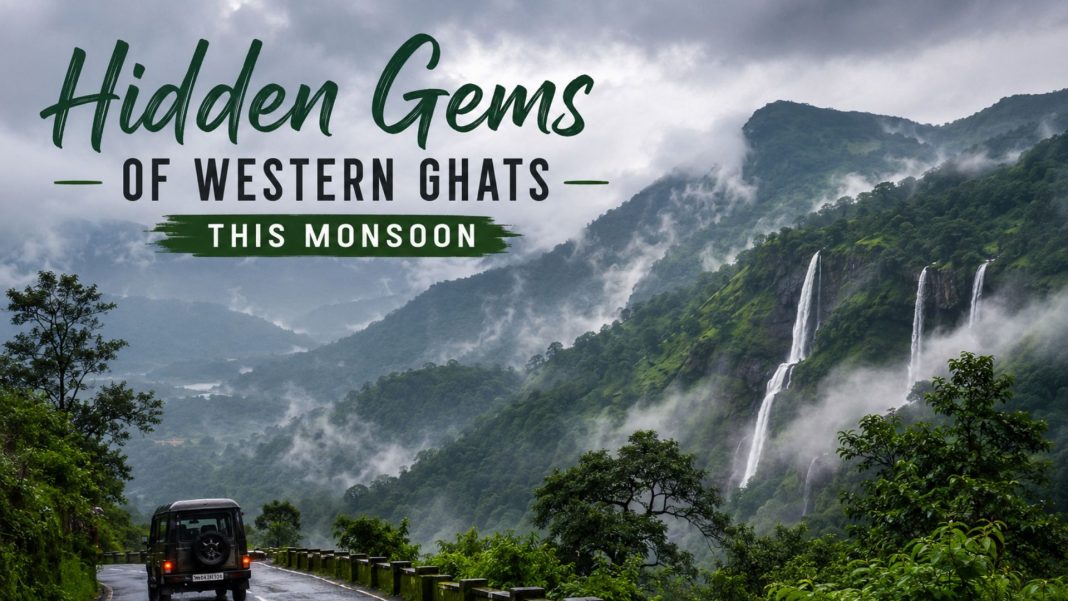

Skip Lonavala & Munnar: When the monsoon clouds roll across India, the Western Ghats turn into a surreal, emerald-green paradise. Thousands of seasonal waterfalls wake up, mist blankets the winding mountain passes, and the air smells of fresh earth.
Naturally, most travelers immediately pack their bags for mainstream hotspots like Lonavala, Mahabaleshwar, or Munnar. But let’s be honest: being stuck in a 4-hour bumper-to-bumper traffic jam on a muddy ghat road, or fighting for a view at a crowded selfie point completely ruins the peaceful monsoon vibe.
If you want to experience the raw, untouched magic of the rains without the chaotic tourist crowds, you need to go off the beaten path. Here are 5 hidden Western Ghats gems that remain blissfully quiet and deeply magical when it rains.
1.Amboli, Maharashtra (The Mystical Land of Whistling Thrushes)
Skip Lonavala & Munnar: Tucked away in the southern eco-sensitive zone of Maharashtra, Amboli is one of the last hill stations before the state line fades into Goa. It receives some of the heaviest rainfall in India, transforming the entire plateau into a living, breathing cloud.
The Monsoon Experience
While the main Amboli waterfall attracts local weekenders, the real magic lies further in. The entire forest floor comes alive with rare bioluminescent fungi that glow in the dark on rainy nights.
Thick fog reduces visibility to just a few feet, making a walk through the surrounding woods feel like a fantasy movie.
What You Shouldn’t Miss
The Hiranyakeshi Temple: Walk down to the ancient temple dedicated to Lord Shiva. Here, the Hiranyakeshi River originates from a dark, mysterious cave opening right out of the rockface. During the monsoons, the water gushes out with incredible force.
Amboli Ghat Drive: The drive down the winding ghat sections offers sheer cliff drops covered in a dense curtain of white foam from hundreds of unnamed, temporary waterfalls.
2.Agumbe, Karnataka (Stepping into a Living Rainforest)
Skip Lonavala & Munnar: Often called the “Cherrapunji of the South,” Agumbe is a tiny, rustic village nestled deep inside the dense tropical rainforests of the Shimoga district. It is a place where time has stood still, and nature rules supreme.
The Monsoon Experience
Rainfall here is intense, relentless, and beautiful. The forest canopy is so thick that even during the day, the rain filters through like a soft green mist.
Because it is highly protected, you won’t find large commercial luxury resorts here instead, you get authentic eco-stays and homestays that put you right in the middle of nature.
What You Shouldn’t Miss
The ‘Malgudi Days’ House: You can visit and even stay at Dodda Mane, a 150-year-old traditional wooden house where the famous television series Malgudi Days was filmed. Eating a hot, home-cooked Malnad meal while watching the rain pour into the central courtyard is unforgettable.
Roaring Waterfalls: Trek through the jungle to find hidden falls like Barkana Falls (one of the highest tier-falls in India) or Onake Abbi Falls, both of which are spectacular during the monsoon.
3.Chorla Ghat, The Tri-State Intersection (Goa-Karnataka-Maharashtra)
Most people only think of Goa for its beaches and nightlife. But if you head east toward the Sahyadri mountain range during the rainy season, you will hit Chorla Ghat, a stunning mountain pass that straddles the borders of Goa, Karnataka, and Maharashtra.
The Monsoon Experience
Chorla Ghat is a dream destination for road-trippers. The tarmac is smooth, winding, and completely enveloped by a dense jungle canopy. As you drive higher, you pass right through the low-hanging rain clouds.
What You Shouldn’t Miss
The Twin Vazira Shakira Waterfalls: These spectacular falls drop down hundreds of feet into the deep Mhadei river valley. In peak monsoon, the viewpoint offers a jaw-dropping look at the sheer power of the jungle rivers.
Anshi National Park / Mhadei Wildlife Sanctuary: The surrounding forests are a biodiversity hotspot, home to the rare Black Panther, Bengal Tigers, and an incredible variety of exotic birds.
4.Vagamon, Kerala (The Silent, Rolling Pine Forests)
While Munnar gets overwhelmed by tourist buses and commercial tea-estate tours, Vagamon remains a quiet, green sanctuary hidden in the Idukki district of Kerala.
It offers a unique landscape of rolling grassy meadows, deep pine valleys, and tea gardens that feel completely isolated from the rest of the world.
The Monsoon Experience
The monsoons turn Vagamon’s landscape into a continuous, vibrant green carpet. The unique element here is the heavy fog that rolls quickly across the open grasslands, turning a bright green field into a mysterious, misty expanse within seconds.
What You Shouldn’t Miss
The Vagamon Pine Forest: Walking through rows of towering, perfectly aligned pine trees while a cool drizzle falls and fog creeps along the forest floor is an incredibly peaceful experience.
Vagamon Kurisumala: A beautiful, misty hill with a monastery at the top.The trek up the hillside in the rain offers panoramic views of the entire valley completely washed clean by the monsoons.
5.Kudremukh, Karnataka (The Ultimate Grassland Trek)
Kudremukh translates to “horse-face,” named after a distinctive mountain peak that resembles the profile of a horse. Located within a strictly protected National Park in the Chikkamagaluru district, this destination restricts commercial buildings, ensuring the landscape remains pristine.
The Monsoon Experience
Kudremukh features high-altitude Shola grasslands. Unlike the rocky peaks of the northern Western Ghats, these mountains are smooth, round, and covered in soft grass.
During the monsoons, they look exactly like the classic, vibrant green screensavers of old computers.
What You Shouldn’t Miss
The Monsoon Trek: Hiking to the Kudremukh peak in the rain is an elite trekking experience. You walk across gushing streams, navigate narrow forest trails, and eventually climb ridges where you are literally walking above the clouds.
Strict Conservation: Because it is a protected area, the Forest Department only allows a limited number of trekkers per day. This keeps the trails clean, quiet, and completely free of plastic and noise.
| Feature | Mainstream (Lonavala / Munnar) | Hidden Gems (Agumbe / Chorla Ghat) |
|---|---|---|
| Crowd Levels | Extremely high; long traffic jams at viewpoints. | Serene; you might be the only explorer on the trail. |
| Nature Access | Commercialized, fenced viewpoints. | Raw, immersive entry right into the rainforest or grasslands. |
| Commercialization | Expensive hotels, fast-food joints everywhere. | Eco-friendly homestays, authentic local cuisine. |
| Vibe | Loud, chaotic, party-centric. | Peaceful, rejuvenating, ideal for a true nature detox. |
Practical Survival Guide for Western Ghats in the Monsoon
Monsoon travel in the Western Ghats is incredible, but the heavy rainfall requires proper preparation. Keep this quick checklist in mind before you head out:
1.What to Pack (The Non-Negotiables)
High-Quality Ponchos: Standard umbrellas will easily break or turn inside out under the strong winds of the mountain ridges. A heavy-duty waterproof poncho is essential.
Anti-Leech Socks: If you are trekking in rainforest zones like Agumbe or Kudremukh, leeches are a common part of the ecosystem. Wearing thick anti-leech socks packed with salt or tobacco powder keeps them away completely.
Waterproof Dry Bags: Ensure your phones, cameras, and extra clothes are sealed inside individual dry bags inside your main backpack.
2.Monsoon Safety Rules
Check for Landslide Advisories: Always check local news and weather reports before driving through steep ghat passes during periods of continuous, extreme downpours.
Avoid Fast-Flowing Streams: Seasonal streams look beautiful, but water levels can rise unexpectedly due to heavy rain upstream. Avoid swimming in unknown rock pools or standing on slippery, moss-covered rocks near waterfall edges.
Drive with Fog Lights On: Visibility can drop to less than five feet within seconds on passes like Chorla Ghat or Amboli. Ensure your vehicle’s fog lights and hazards are fully functional.
3.Savor the Local Flavors
Don’t miss out on the local monsoon culinary traditions. Enjoying a plate of hot Kanda Bhajji (onion fritters) with ginger tea at a roadside stall in Maharashtra, or sipping spicy, herbal Kashaya (hot wellness brew) in a Karnataka homestay while listening to the heavy downpour makes the journey complete.
Also Read: Maa Behan Review: Madhuri Dixit and Triptii Dimri Smash Patriarchy in Dark Comedy