


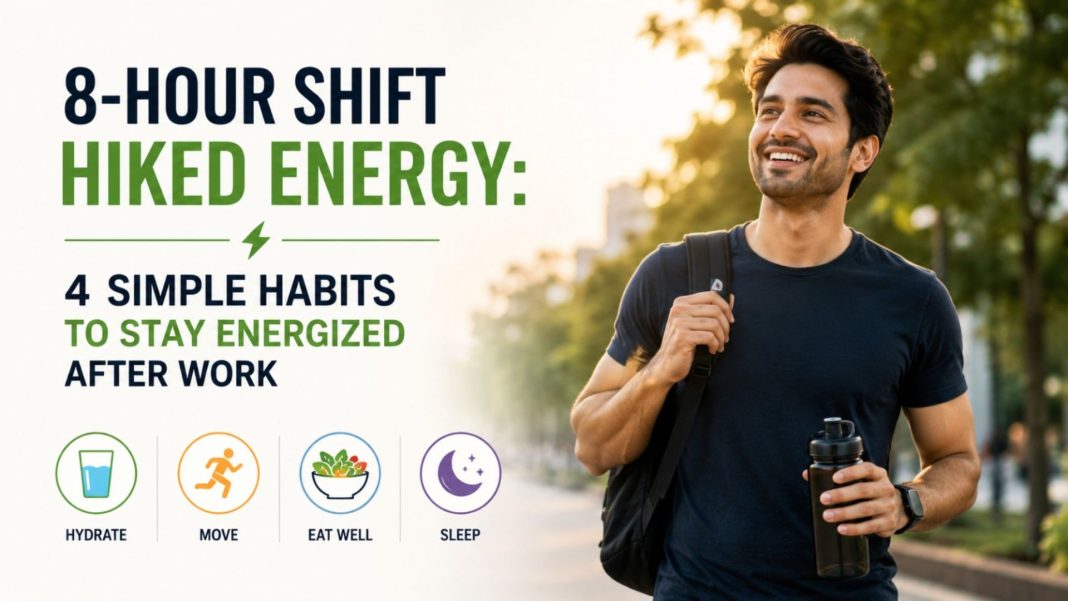

8-Hour Shift Hiked Energy: Do you find yourself completely exhausted after finishing your 8-hour shift? For many working professionals, the day practically ends the moment they log out or leave the office.
You drag yourself home, crash on the couch, and spend the rest of the evening scrolling mindlessly through your phone.
But your life shouldn’t just be about working and sleeping. You deserve to have enough stamina for your hobbies, family, and personal growth after office hours.
The good news is that post-work fatigue isn’t always about a lack of sleep it is often about how you manage your energy during the day.
By making a few small adjustments to your daily routine, you can beat the post-shift slump.
Here are 4 simple, practical habits you can start practicing today to stay fresh and energetic even after a long workday.
1.Fix Your Lunch and Hydration Routine
8-Hour Shift Hiked Energy: What you put into your body during your 8-hour shift dictates exactly how you will feel at 5:00 PM.
Many people make the mistake of eating a heavy, carb-rich lunch (like burgers, heavy rice dishes, or sugary items) or relying on multiple cups of coffee to get through the afternoon.
Avoid the Post-Lunch Crash
A heavy lunch causes a sudden spike in your blood sugar, followed by a massive crash.
This is why you feel incredibly sleepy around 3:00 PM. Instead, switch to a balanced meal that combines lean proteins, healthy fats, and complex carbohydrates (like salads, whole grains, sprouts, and grilled veggies).
These foods release energy slowly into your bloodstream, keeping you alert for hours.
The Power of Water Over Caffeine
Mild dehydration is one of the leading hidden causes of daytime fatigue and brain fog.
Instead of reaching for a third cup of coffee (which will make you more tired later) eep a water bottle at your desk.
Drink at least 2 to 3 liters of water during your shift. Proper hydration keeps your metabolism active and prevents that sluggish, exhausted feeling when you leave the office.
2.Take Strategic Micro-Breaks (The 50-10 Rule)
8-Hour Shift Hiked Energy: Sitting at a desk or staring at a screen continuously for hours drains your mental energy faster than physical labor. When your brain is overworked without rest, it enters a state of chronic fatigue by the end of your shift.
Move Every Hour
To combat this, adopt the 50-10 rule. For every 50 minutes of focused work, take a 10-minute micro-break.
You don’t need to do a full workout; just stand up, stretch your arms, walk to get a glass of water, or look out the window.
Moving your body improves blood circulation and delivers fresh oxygen to your brain.
It resets your mental bandwidth, so you don’t leave work feeling completely brain-dead.
3.Create a Strict “Work-to-Home” Transition Ritual
A major reason people feel exhausted after work is mental carryover. If you are still stressing about an unfinished project, an angry client, or a pending email during your commute, your brain is technically still working. This psychological stress physically drains your body.
Decompress During Your Commute
You need a clear boundary or a “switch” that signals your brain that the workday is officially over. Use your commute to transition out of work mode:
Listen to an engaging podcast or upbeat music.
Read a fictional book if you travel by metro or bus.
Practice deep breathing for 5 minutes in your car.
Leave Work at the Door
Avoid checking work emails or answering professional messages once you get home. By consciously disconnecting your mind from office problems, you instantly preserve a massive amount of mental energy for your personal life.
4.Master the Art of the 20-Minute Power Nap
If you reach home and feel like your body absolutely needs rest, do not go for a long 1-to-2-hour sleep.
Sleeping for a long duration in the evening will disrupt your internal body clock, making it difficult to sleep at night, which creates a vicious cycle of tiredness the next day.
Keep it Short and Sweet
Instead, take a disciplined 20-minute power nap. Science shows that a short 20-minute snooze gives your brain a quick reboot without letting you fall into a deep sleep state (called REM sleep).
When you wake up from a power nap, you will feel incredibly refreshed, alert, and ready to tackle your evening plans whether it’s hitting the gym, cooking a nice meal, or hanging out with friends.
What This Means for Your Long-Term Lifestyle
Consistently managing your energy levels isn’t just about feeling good today; it alters your entire lifestyle and professional productivity.
Better Physical Health: When you have energy after work, you are much more likely to exercise, go for walks, or cook healthy meals instead of ordering fast food out of sheer exhaustion.
Improved Mental Well-being: Having a life outside of your job reduces professional burnout, keeps stress levels low, and vastly improves your mood and relationships.
Changing your post-work energy levels doesn’t require a massive lifestyle overhaul. Start by fixing your lunch tomorrow, drinking more water, and taking short steps away from your screen. You will be surprised by how much life you still have left in you after your 8-hour shift is done.
Informational and General Disclaimer
Individual Variations: The lifestyle tips and habits mentioned in this article (such as dietary adjustments, breaks, and power naps) are based on general productivity and wellness principles.
Individual energy patterns and health requirements may vary based on personal medical conditions, specific job environments, and lifestyle differences.
Not Medical Advice: This content is purely intended for educational and general informational purposes.
It should not be taken as professional medical advice, diagnosis, or treatment. If you experience chronic, unexplained fatigue or severe exhaustion that impacts your daily life, please consult a qualified healthcare professional or physician.
Also Read: More Than Just Condoms: A Guide to the Best Contraception Options for You