


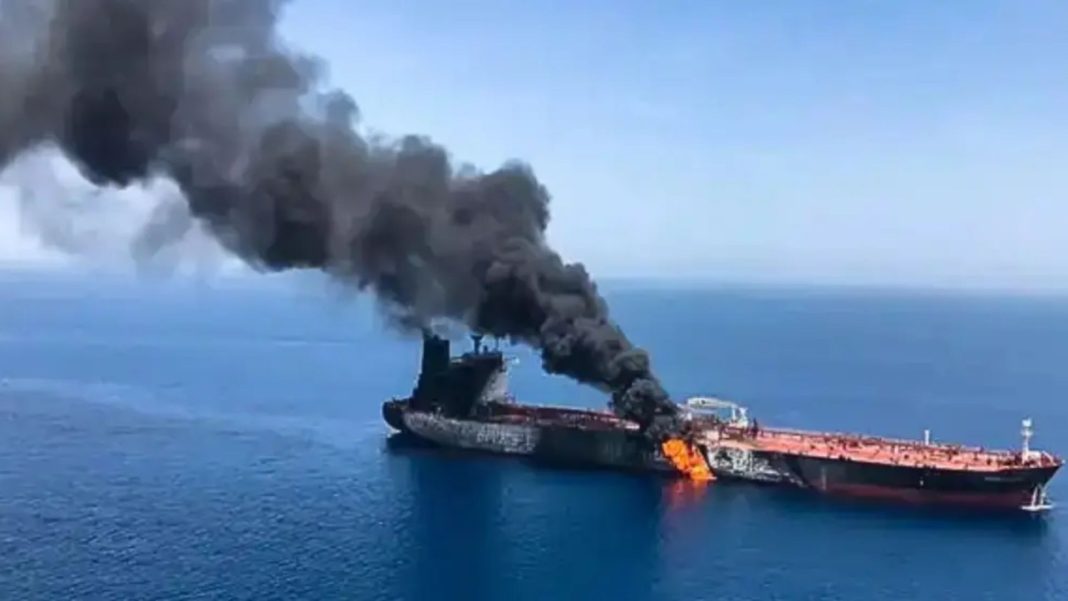

Oman Ship Attack: Amid escalating geopolitical tensions between the United States and Iran, a commercial vessel has come under sudden attack in the strategic waters of the Strait of Hormuz, near the coast of Oman. In a deeply concerning development, at least 24 Indian crew members are confirmed to be aboard the stricken ship, sparking an urgent, high-stakes rescue plea from maritime bodies.
The Forward Seamen’s Union of India (FSUI), a premier organization representing Indian seafarers, sounded the alarm early today. According to the union, the vessel managed to transmit an emergency distress alert, signalling imminent danger in one of the world’s most volatile maritime choke points.
S.O.S. From the High Seas: What We Know So Far
Oman Ship Attack: The FSUI took to the social media platform X (formerly Twitter) to flag the crisis, sharing the exact geographical coordinates of the vessel at the time of the distress broadcast.
While details regarding the nature of the attack remain scarce, the situation on the ground appears highly critical.
The Location: The Strait of Hormuz, near the Omani coastline, a vital global shipping lane already simmering with military and political friction.
The Crew: 24 Indian nationals are confirmed to be trapped on board, anxiously awaiting a response to their SOS.
The Damage: As of now, it remains unclear whether the ship was targeted by drone strikes, naval mines, or a piracy attempt.
Casualties: There is currently no official data regarding damage to the hull or injuries to the crew members.
“The situation is sensitive, and the distress alert indicates the crew requires immediate intervention. We are tracking the coordinates closely.”
( Statement from the Forward Seamen’s Union of India.)
Choke Point in Crossfire: The US-Iran Factor
Oman Ship Attack: This latest maritime assault comes against the backdrop of a severe diplomatic and military standoff between Washington and Tehran. The Strait of Hormuz, which sees nearly a fifth of the world’s petroleum consumption pass through its narrow waters, has frequently become a geopolitical battleground.
Incidents of ship seizures, drone deployments, and mysterious explosions have spiked in recent months, turning commercial civilian sailors into collateral damage in a larger proxy war.
Waiting for New Delhi’s Move: Government Silence for Now
Despite the mounting panic among the families of the stranded sailors, Indian authorities have yet to release an official statement.
The Ministry of External Affairs (MEA) and the Indian Navy, which routinely deploys warships in the Gulf region under Operation Sankalp to protect Indian-flagged merchant vessels, are reportedly verifying the ground reality. Experts believe that behind-the-scenes diplomatic channels are already working at full capacity to coordinate with Omani authorities and international maritime security coalitions.
The Road Ahead: High Stakes and Timely Rescue
For India, a major supplier of seafaring manpower globally, the safety of its citizens in conflict zones remains a top priority. The next few hours will be critical as maritime security agencies attempt to establish direct communication with the vessel.
With families of the 24 sailors waiting in agony, the maritime community has urged New Delhi to act swiftly to prevent a hostage situation or a potential tragedy at sea.
Also Read : OIL SHOCK: Crude Surges Past $96 as Israel-Lebanon Clashes Explode Middle East Peace Hopes