


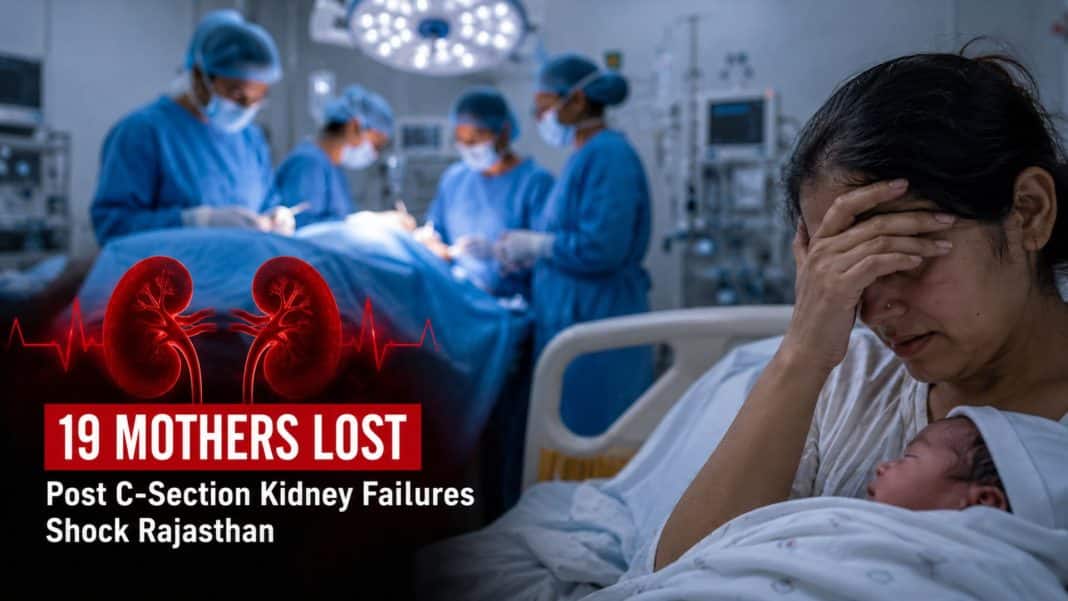

Rajasthan Maternal Health Crisis: A severe healthcare crisis has gripped Rajasthan as the state grapples with a tragic surge in maternal mortality following Caesarean section (C-section) deliveries.
According to local media reports, the death toll has reached 19 mothers across multiple state-run hospitals within a short span of two to three months.
The latest casualty was reported on Tuesday in Bikaner, where a 25-year-old mother succumbed to acute kidney failure after fighting for her life for 36 days.
The alarming pattern of post-delivery complications characterized by sudden drop in urine output, heavy bleeding, and multi-organ failure has raised serious questions regarding the quality of emergency drugs, intraoperative fluids, and infection control protocols inside government maternity wards.
Bikaner Shocked by Third Maternal Death at PBM Hospital
Rajasthan Maternal Health Crisis: The latest incident involved 25-year-old Kamla, who was admitted to the PBM Government Hospital in Bikaner.
Media sources state that Kamla, who had a history of diabetes and two prior C-sections, underwent a medically necessary Caesarean delivery.
However, within 24 hours of the surgery, her health deteriorated rapidly as she stopped passing urine a classic sign of acute kidney injury. She was immediately placed on ventilator support and underwent multiple rounds of dialysis.
While she briefly showed signs of stabilization, a subsequent surgery related to her C-section stitches triggered a multi-organ dysfunction, leading to her death on Tuesday.
This marks the third post-C-section death at Bikaner’s PBM Hospital in quick succession. Earlier, 20-year-old Preeti and 26-year-old Sharda passed away under remarkably similar clinical conditions.
In Sharda’s case, repeated dialysis cycles failed to revive her failing kidneys. Doctors noted that a common thread linking these patients was the sudden cessation of urine production within hours of their surgical procedures.
The Dark Footprint: A Look at the Spread Across Rajasthan
Rajasthan Maternal Health Crisis: The tragedy is not isolated to Bikaner. Media reports reveal that the issue is widespread, affecting several key districts across Rajasthan over the past few weeks.
The geographical distribution of the 19 reported fatalities paints a bleak picture of the public healthcare infrastructure:
Bhilwara and Banswara: The highest cluster, accounting for 9 deaths.
Kota: 5 deaths reported at major state-run facilities.
Bikaner: 3 deaths, all presenting identical post-operative renal failure.
Jodhpur: 2 deaths recorded under similar emergency circumstances.
In districts like Bhilwara and Banswara, investigative teams were rushed from Jaipur after a sudden spike in maternal mortality within the obstetrics departments.
While preliminary reports in some instances pointed toward chronic maternal issues like severe anemia and pregnancy-induced hypertension, health activists argue that the sheer volume of cases pointing to organ failure indicates an external systemic trigger.
Spurious Drugs and Contamination: What the Probes Reveal
As public outrage grew, the Food Safety and Drug Control Commissionerate along with state health authorities initiated high-level inquiries.
Medical experts and health networks, such as the Jan Swasthya Abhiyan (JSA), strongly suspect the role of contaminated IV fluids, faulty spinal anesthesia kits, or substandard emergency medicines administered during delivery.
A primary focus of the investigation in certain regions, including Kota, revealed highly compromised batches of Oxytocin a life-saving hormone routinely injected post-delivery to contract the uterus and prevent postpartum hemorrhage (excessive bleeding).
According to media reports and subsequent laboratory probes, the supplied vials from a specific manufacturer contained little to no active ingredients, essentially leaving patients to suffer severe, unmanaged blood loss.
Medical experts note that severe, uncorrected blood loss leads to systemic hypovolemia (low blood volume), starving the kidneys of oxygenated blood and resulting in rapid, acute kidney failure.
Furthermore, investigators have seized dozens of drug samples from Bikaner and other affected hospitals to rule out fulminant endotoxemia a condition caused by bacterial endotoxins contaminating intravenous fluids or surgical equipment, which instantly triggers a hyperacute clinical collapse, sharp drop in blood pressure, and renal shutdown.
Public Outrage and the Road Ahead for Healthcare Safety
The sudden loss of 19 new mothers has put the state administration under severe scrutiny. Opposition leaders and health advocacy groups are demanding criminal accountability for procurement agencies, rigorous quality testing protocols, and immediate financial compensation for the grieving families.
In response to the unfolding crisis, the state government has instituted a centralized review committee to overhaul emergency drug procurement.
Medical authorities are reportedly drawing up stricter Standard Operating Procedures (SOPs) for local hospital purchases, ensuring that no unverified or sub-standard pharmaceutical batches ever enter the operating theaters.
For the families of the victims, however, these systemic corrections come too late, highlighting the fatal cost of lapses in basic healthcare safety.