

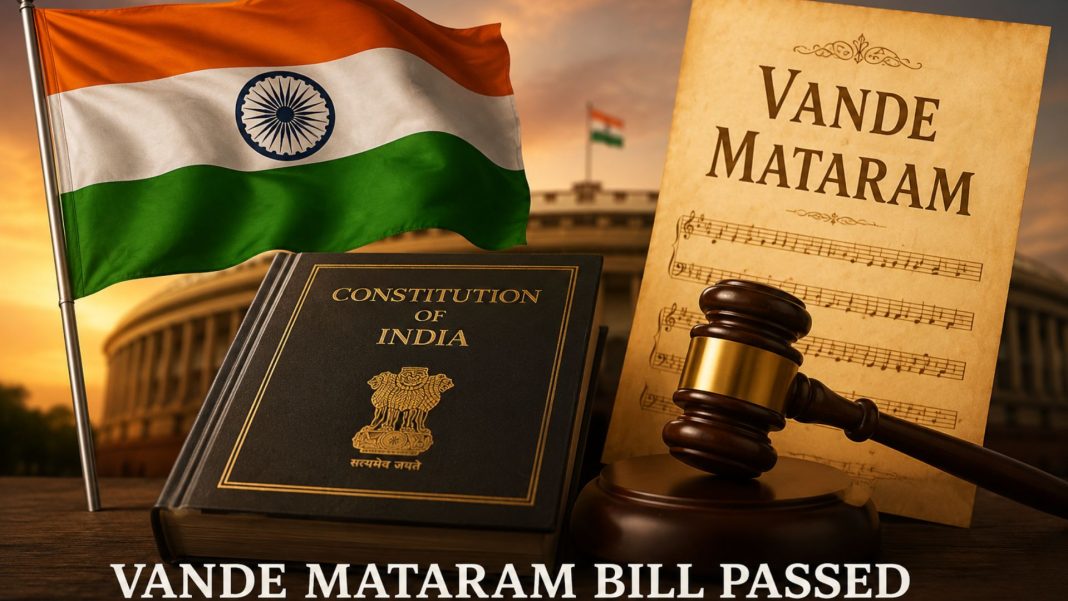

Vande Mataram Bill Passed: In a significant legislative move aimed at safeguarding national symbols, Parliament has officially cleared the Prevention of Insults to National Honour (Amendment) Bill, 2026.
Following its prior passage in the Rajya Sabha, the Lok Sabha approved the proposed legislation by a voice vote on July 30, amidst ongoing parliamentary debates.
The bill now awaits presidential assent, following which the provisions will formally become law across the country.
According to media reports, the statutory amendment extends formal legal protection to India’s National Song, Vande Mataram, bringing it under the same regulatory umbrella that currently protects the National Flag, the Constitution, and the National Anthem, Jana Gana Mana.
The passage of the bill coincides with the ongoing 150th anniversary celebrations of the creation of Vande Mataram.
Punitive Provisions: Penalties and Imprisonment Terms Detailed
Vande Mataram Bill Passed: As reported by media outlets, the amended legislation introduces strict penal consequences for deliberate acts of disrespect or disruption aimed at the National Song.
Key Legal Penalties Under the Amendment
First-Time Offence: Individuals found guilty of intentionally insulting, ridiculing, or disrupting the singing or playing of Vande Mataram face up to three years of imprisonment, a monetary fine, or both.
Repeat Offence Mandate: For individuals previously convicted under the law who commit a subsequent offence, the legislation mandates a compulsory minimum prison term of one year.
Intent Requirement: Authorities clarified that criminal prosecution will apply exclusively to deliberate and intentional acts of disrespect. Unintentional errors, minor oversights, or accidental disruptions will not be categorized as criminal acts.
Rationale Behind the Legislative Amendment
According to official statements cited in news reports, the Central Government brought forward the amendment to legally preserve the historical and cultural legacy of Vande Mataram.
The composition played a pivotal role in unifying citizens during India’s freedom movement, inspiring national devotion among millions.
Government representatives emphasized that elevating the statutory status of the National Song aligns with existing Ministry of Home Affairs (MHA) advisory protocols.
Prior guidelines issued to state administrations specified that during official functions where both the National Song and National Anthem are rendered, Vande Mataram should precede Jana Gana Mana, with all six original stanzas being performed.
The newly passed legislation provides a binding legal foundation to these administrative directives.
Integration Into the 1971 Framework
The fundamental objective of the 2026 amendment is to update the original Prevention of Insults to National Honour Act, 1971.
Comparison of Statutory Protections
| Protected National Symbol | Status Under 1971 Base Act | Status Under 2026 Amendment |
|---|---|---|
| National Flag (Tiranga) | Fully Protected | Fully Protected |
| Constitution of India | Fully Protected | Fully Protected |
| National Anthem (Jana Gana Mana) | Fully Protected | Fully Protected |
| National Song (Vande Mataram) | Not Protected | Fully Protected (Up to 3 Years’ Imprisonment) |
According to legal experts tracking the development, the incorporation ensures that public mockery, deliberate disruption during ceremonies, or physical disrespect toward the National Song will trigger standard criminal procedures on par with insults directed at the National Anthem.
Parliamentary Proceedings and Political Context
According to media accounts covering the legislative session, the Lok Sabha cleared the amendment bill amid active protest from opposition members regarding separate public issues, including administrative responses to competitive examination paper leaks.
Despite opposition slogans and subsequent walkouts by several parliamentary factions during earlier upper house debates, the bill was passed via voice vote.
Lawmakers supporting the bill reiterated that the primary intent of the statutory update is not to encourage litigation or foster controversy, but rather to institutionalize legal respect for national heritage.
Once signed by the President of India, the amendment will immediately enter into force nationwide, establishing equal statutory reverence for both Vande Mataram and Jana Gana Mana.
Also Read: Anti-Paper Leak Bill Passed in Lok Sabha: Check New Rules, Fines, and Jail Terms