

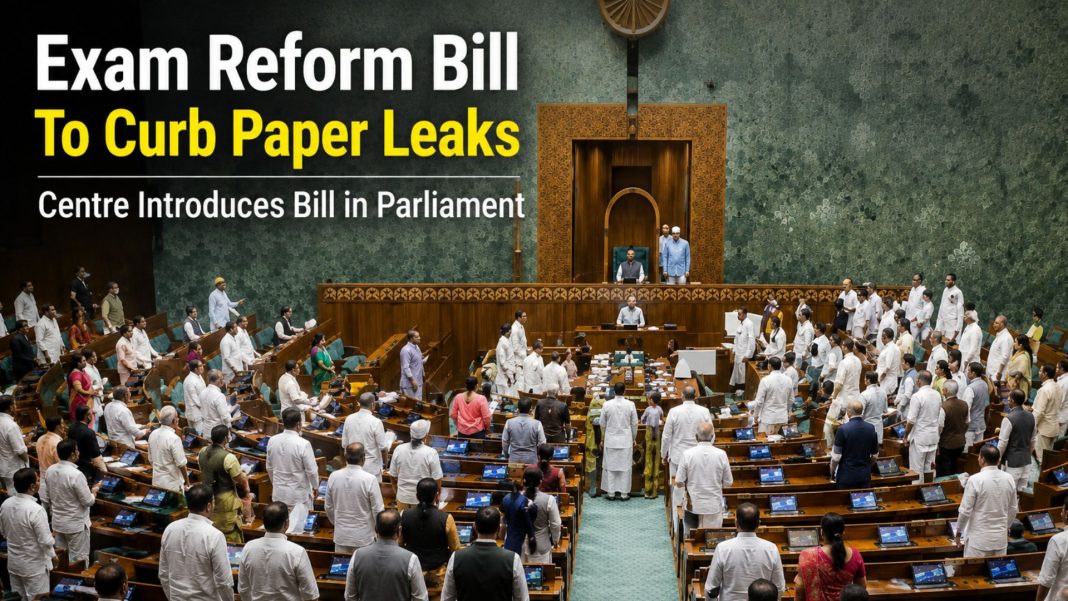

Anti-Paper Leak Bill Passed in Lok Sabha: In a significant legislative move aimed at restoring public trust in national entrance tests, the Lok Sabha passed the Public Examinations (Prevention of Unfair Means) Amendment Bill, 2026, by a voice vote on Wednesday.
The legislation significantly tightens the legal framework against examination malpractices, introducing stringent prison terms, hefty financial penalties, and mandatory time-bound judicial trials.
The passage of the bill comes on the heels of nationwide student agitations led by political groups, following which the Union government accepted major demands, including compensation for affected families and high-level administrative reshuffles.
To become law, the amendment now awaits approval from the Rajya Sabha before being sent to President Droupadi Murmu for assent.
Major Highlights: Steeper Fines and Extended Jail Terms
Anti-Paper Leak Bill Passed in Lok Sabha: The newly passed amendment bill fundamentally revises the quantum of punishment for individuals, service providers, and organized cheating syndicates. According to media reports, key penalty revisions include:
Individual Offenders: The minimum prison term for individuals engaging in paper leaks or unfair means has been increased from three years to five years.
The maximum sentence can now extend up to 10 years, accompanied by a maximum fine of ₹50 lakh (up from ₹10 lakh).
Organized Crime Syndicates: For organized examination-related fraud involving networks or institutions, the minimum jail term has been enhanced to seven years, with minimum fines raised to ₹10 crore.
Service Providers and Management: Private testing agencies or third-party service providers found guilty face maximum fines of up to ₹5 crore (increased from ₹1 crore) and an eight-year ban from conducting public examinations.
Senior executives and directors complicit in the crime face a minimum of five years in prison.
Time-Bound Investigations and Special Fast-Track Courts
To prevent prolonged legal delays in paper leak cases, the Public Examinations Amendment Bill, 2026 introduces strict operational timelines.
According to media reports, all investigations conducted by law enforcement, central agencies, or a dedicated Special Task Force (STF) must be completed within a two-month deadline.
Furthermore, state governments and Union Territory administrations are empowered to designate Special Fast-Track Courts to hear these cases on a day-to-day basis, with trials mandated to wrap up within three months from the filing of the charge sheet.
Heated Parliamentary Debate: Rahul Gandhi and Kiren Rijiju Clash
While both sides of the aisle broadly aligned on the necessity of a stringent anti-cheating law, the proceedings were marred by an intense political showdown.
Leader of the Opposition Rahul Gandhi made sharp accusations regarding high-level authorization behind police actions during recent student protests.
His remarks drew immediate opposition from Parliamentary Affairs Minister Kiren Rijiju, who demanded that unverified allegations be backed by evidence or retracted with an apology.
The debate escalated further over linguistic objections raised by the Treasury benches regarding Gandhi’s usage of the word “idiot” during his address.
Rijiju characterized the remarks as unparliamentary and urged the Chair to expunge the statements from the record.
Rebuilding Credibility in India’s Examination System
Defending the bill, Union Minister Jitendra Singh emphasized that the amendments demonstrate the central government’s unwavering commitment to protecting the sanctity and transparency of public competitive examinations.
As per official statements cited in reports, the introduction of fast-track judicial mechanisms and stringent financial disincentives aims to dismantle organized paper-leak networks and safeguard the interests of millions of hardworking students across the nation.
Also Read: IBPS CSA Recruitment 2027-28: Apply Online for Customer Service Associate Posts from August 1