


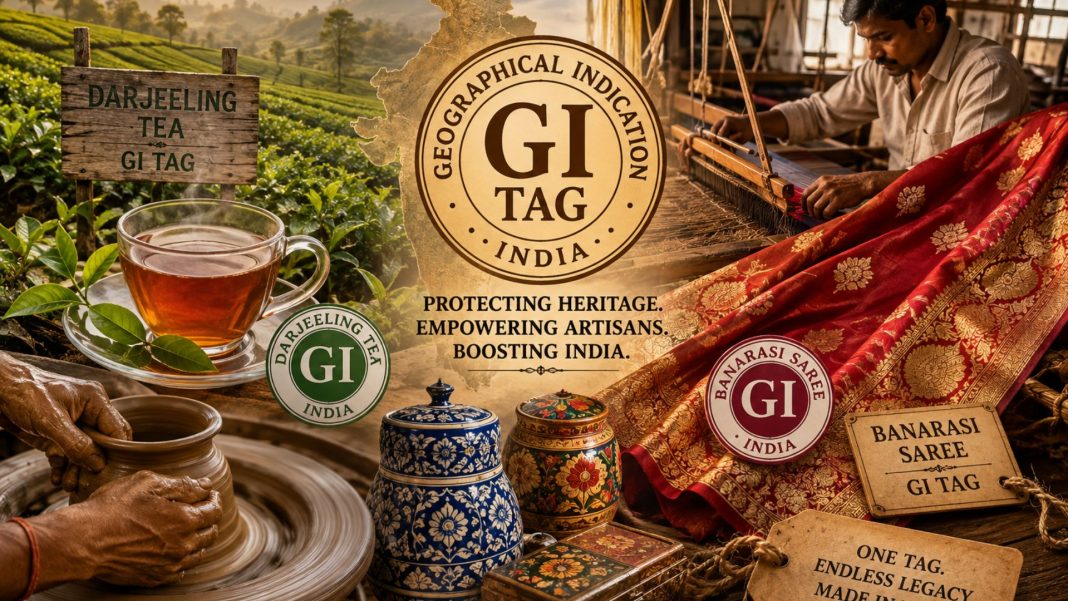

From Darjeeling Tea to Banarasi Sarees: From the aromatic mist of Darjeeling’s tea gardens to the intricate blue glaze of Jaipur’s pottery kilns, India’s rich tapestry of regional craftsmanship is receiving a major legal and economic boost.
Geographical Indication (GI) tags, a specialized intellectual property label granted to products with distinct origins, traditional methods, and localized quality, have evolved into a powerful tool for rural economic growth, brand protection, and global trade.
With over 800 registered GI products nationwide, India continues to turn age-old heritage into internationally recognized brands.
What is a GI Tag, and Why Does It Matter?
From Darjeeling Tea to Banarasi Sarees: A Geographical Indication is more than just a label, it acts as a trademark of authenticity for a specific region.
Proof of Origin: It certifies that a product’s quality, reputation, or unique traits are directly tied to its geographical roots.
Shield Against Counterfeits: It creates a legal safeguard that prevents imitation, protecting authentic makers from mass-produced knockoffs.
Economic Boost: By establishing a clear identity, GI certification elevates market value, direct income, and export power for local communities.
Iconic Champions: The Trailblazers of India’s GI Movement
From Darjeeling Tea to Banarasi Sarees: Several iconic products stand out as primary examples of how regional identity builds global prestige:
Darjeeling Tea (West Bengal): Famous as the “Champagne of Teas,” it became India’s very first GI-tagged product in 2004. Its delicate muscatel flavor cannot be replicated anywhere else in the world.
Banarasi Saree (Uttar Pradesh): Woven with fine gold and silver threads (Zari), these world-renowned silk sarees carry centuries of weaving lineage that is legally protected under the GI framework.
Jaipur Blue Pottery (Rajasthan): Recognized for its vibrant cobalt hues and quartz-based technique without the use of clay, this craft has successfully moved from royal courts to international export markets.
Preserving Tradition, Powering Tomorrow: The Impact
From Darjeeling Tea to Banarasi Sarees: Protecting Local Artisans & Farmers: GI tags safeguard indigenous knowledge from exploitation, ensuring that revenues go directly back to the weavers, farmers, and craftspeople.
Fueling Export & Retail Expansion: Through initiatives like One Station One Product (OSOP) at railway stations, PM Ekta Malls, and dedicated international export channels via APEDA, GI products are reaching wider markets than ever before.
Sustaining Cultural Heritage: By guaranteeing fair value and recognition, the GI tag incentivizes younger generations to learn traditional skills and keep heritage crafts alive.
The 2026 GI Registration Surge
The momentum behind Geographical Indications has reached unprecedented levels:
Milestone Numbers: India’s total registered GI count has surged past 820 products, with handicrafts accounting for over 50% of all registrations, followed by regional agricultural crops.
Regional Highlights: Eastern and Central India have led the recent wave of approvals. States like Madhya Pradesh and West Bengal recently registered dozens of new products, ranging from West Bengal’s historic Jalbhara Sandesh to indigenous tribal crops like
Digital & Global Push: Government initiatives now offer 100% digital filing processes for GI registration and support local clusters through heritage tourism circuits, such as silk trails and craft villages.
As global consumers increasingly seek out authentic, sustainable, and origin-backed goods, India’s GI tag revolution is ensuring that centuries of local skill remain both culturally preserved and commercially prosperous.