


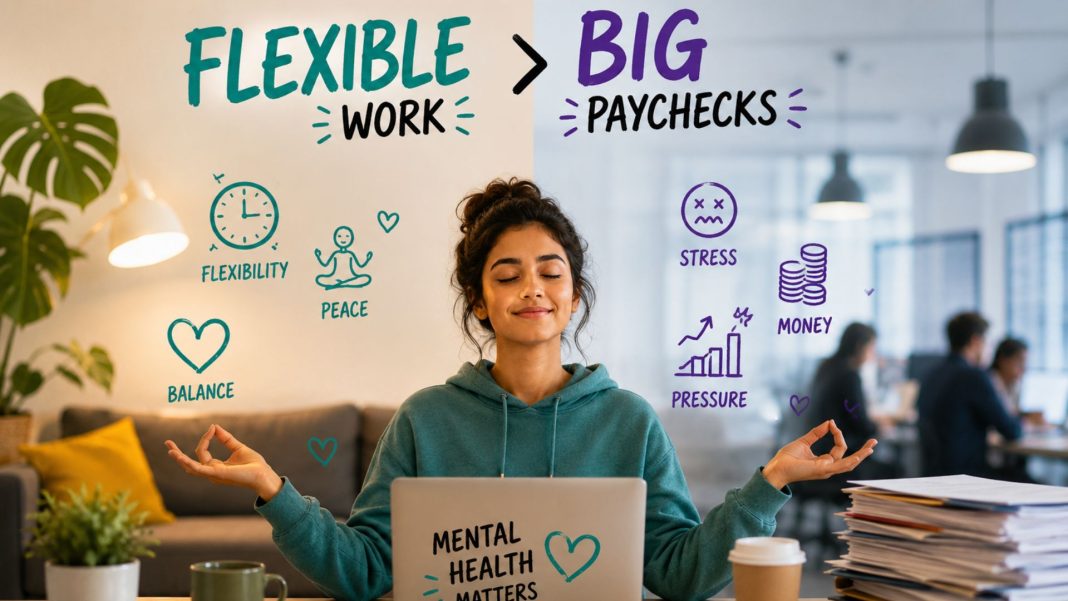

Gen Z Workplace Preferences: The definition of work is undergoing a fundamental transformation as Generation Z enters the global workforce with priorities markedly different from previous generations.
While older cohorts such as Baby Boomers and Millennials often equated career success with long hours, corporate loyalty, and personal sacrifices, Gen Z professionals are reshaping employment norms by prioritizing workplace flexibility, mental well-being, and personal fulfillment above high compensation packages.
According to media reports referencing studies by global research firms and labor bureaus, this generational shift in work ethic has triggered widespread debate across corporate environments.
However, contrary to common misconceptions framing the younger workforce as disengaged, data reveals that Gen Z is actively redefining productivity and life balance in response to modern economic realities.
The Generational Divide: Work Ethic Misconceptions vs. Reality
Why Gen Z Wants Flexible Work: For decades, traditional workplace expectations were dictated by the values of Baby Boomers and Millennials, who viewed extended office hours and high personal sacrifice as essential stepping stones to career advancement.
As Gen Z integrates into corporate roles, these contrasting values have led to friction regarding organizational expectations.
According to survey data reported by media outlets:
Perception Gaps: A recent workplace study highlighted that 46% of respondents considered Baby Boomers to possess the strongest work ethic, whereas only 9% attributed the same trait to Gen Z employees.
Management Challenges: In an earlier managerial survey, nearly 74% of managers expressed that collaborating with Gen Z employees posed unique operational challenges due to differing expectations around authority and work structure.
Despite these perceptions, researchers emphasize that Gen Z does not view work as the sole focal point of existence; rather, they regard employment as one integrated component of a broader, balanced life.
Statistical Insights: Pushing Back Against the “Lazy” Stereotype
Gen Z Workplace Preferences: A frequent criticism directed at younger professionals is an alleged lack of commitment. However, official labor statistics dismantle the notion that Gen Z workers are inherently unproductive.
As reported by media sources citing US Bureau of Labor Statistics data:
Full-time employees aged 20 to 24 work an average of 40.5 hours per week.
By comparison, workers aged 25 and older log an average of 41.9 hours per week, showing only a minor statistical variance.
Furthermore, rather than restricting their energy solely to traditional 9-to-5 roles, a substantial segment of Gen Z professionals actively pursues secondary income streams, freelancing projects, content creation, and personal passion pursuits alongside their primary jobs.
Rejection of the Traditional 9-to-5 Model and Focus on Mental Health
The desire to dismantle rigid office structures stems directly from Gen Z’s focus on mental health and stress prevention.
According to media reports citing major global surveys:
KPMG US Survey: Approximately 47% of Gen Z respondents expressed an explicit desire to move away from traditional 9-to-5 corporate working models in favor of flexible arrangements.
Deloitte Global Study: Around 46% of Gen Z employees actively select employers based on whether the organization prioritizes mental health resources, psychological safety, and flexible working environments to prevent occupational burnout.
Economic Factors Shaping the Gen Z Mindset
The pragmatic approach adopted by Gen Z toward employment is strongly influenced by the macroeconomic environment in which they entered the workforce.
Rapid advancements in Artificial Intelligence (AI), widespread digital surveillance tools, employment instability, corporate layoffs, and a rising cost of living have fundamentally altered career expectations.
Recognizing that long-term job security is no longer guaranteed, younger professionals are unwilling to compromise their physical and mental health for corporate demands.
Instead, they seek workplaces that offer competitive pay alongside personal respect, psychological well-being, work-life integration, and a clear sense of purpose.
As companies adjust to these changing expectations, adapting to flexible work models is increasingly becoming a necessity for attracting and retaining young talent.