


Healthy Indian Food: Today, healthy eating is often associated with protein powders, superfoods, calorie tracking and expensive wellness products.
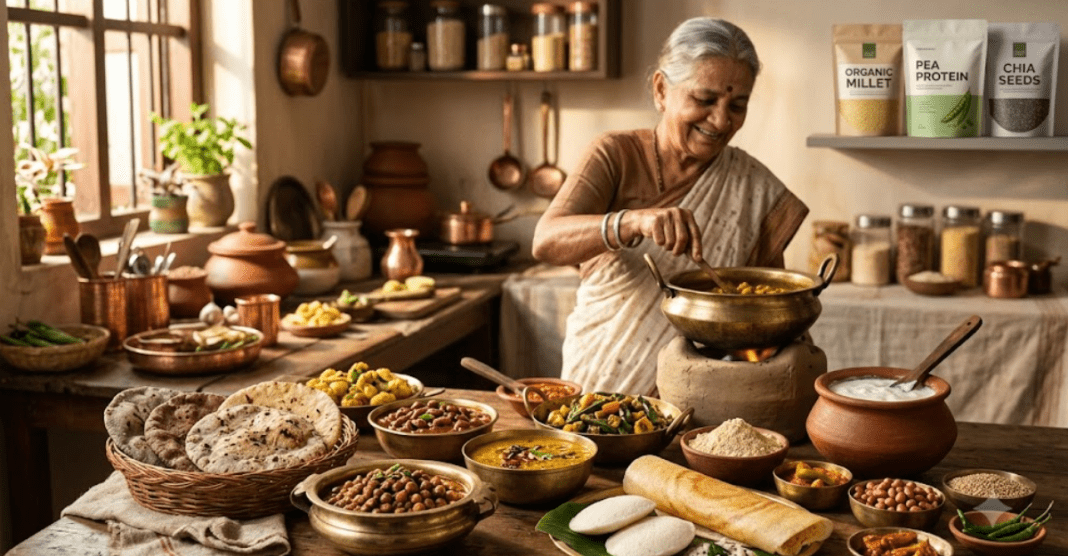
But long before these trends became popular, traditional Indian kitchens already had a wide range of nutrient-rich foods. Millets, pulses, seasonal vegetables, homemade curd, nuts, seeds and traditional dairy were regular parts of everyday meals.
Nutrition experts say the real lesson from our grandparents’ eating habits is not to copy their diet exactly, but to bring back the principles of variety, balance, seasonality and minimal processing.
Ragi, Bajra and Jowar: India’s Original Millets
Healthy Indian Food: Ragi, bajra and jowar may be enjoying a major wellness revival today, but they were never new discoveries for Indian households.
These traditional grains have long been used to prepare rotis, porridges, cheelas and other everyday dishes.
Experts suggest that millets should become a regular part of the diet rather than being treated as a temporary health trend.
Sattu: The Traditional Protein Source
Healthy Indian Food: Long before protein powders became popular among fitness enthusiasts, sattu was already providing a convenient plant-based source of protein and fibre.
Along with sattu, foods such as dal, kala chana, rajma, lobia, moth beans and urad dal have traditionally contributed protein and fibre to Indian meals.
These simple foods can easily fit into a vegetarian diet without requiring major changes to familiar eating habits.
Peanuts and Sesame Were Already Part of the Kitchen
Peanuts and sesame seeds are another example of foods that have recently gained a “superfood” reputation despite being familiar ingredients in Indian homes for generations.
Healthy Indian Food: They can be added to chutneys, porridges, ladoos or everyday meals.
Experts, however, stress that even traditionally healthy foods should be consumed sensibly, particularly when salt or sugar is added.
Idli, Dosa and Homemade Curd: The Traditional Fermented Foods
India’s traditional diet also includes several fermented foods, including idli, dosa, dhokla and homemade curd.
According to the experts cited in the source, fermentation may affect the digestibility of foods and the uptake of nutrients.
Fermented foods have also been studied for their potential role in supporting gut health.
The Secret Was Never One ‘Superfood’
Healthy Indian Food: Perhaps the biggest lesson from the traditional Indian kitchen is that there was never a need to depend on a single miracle ingredient.
Instead, the traditional plate brought together cereals or millets, pulses, vegetables, fruits, nuts or seeds and appropriate dairy foods.
Experts describe balance, variety and minimal processing as the key principles worth bringing into modern eating habits.
But We Shouldn’t Romanticise Every Traditional Dish
Healthy Indian Food: The idea that everything our grandparents ate was automatically healthier also needs a reality check.
Some traditional preparations can contain high amounts of salt, sugar, oil or saturated fat.
Experts therefore recommend taking the best principles from traditional diets rather than attempting to recreate the past exactly.
The takeaway is simple: the answer may not be another expensive superfood or the latest diet trend.
It could simply be a return to fresh, diverse, seasonal and minimally processed foods, the basic principles that were already at the heart of the traditional Indian plate.
Also Read: Silent Signs of Anxiety: What Your Body is Trying to Tell You