


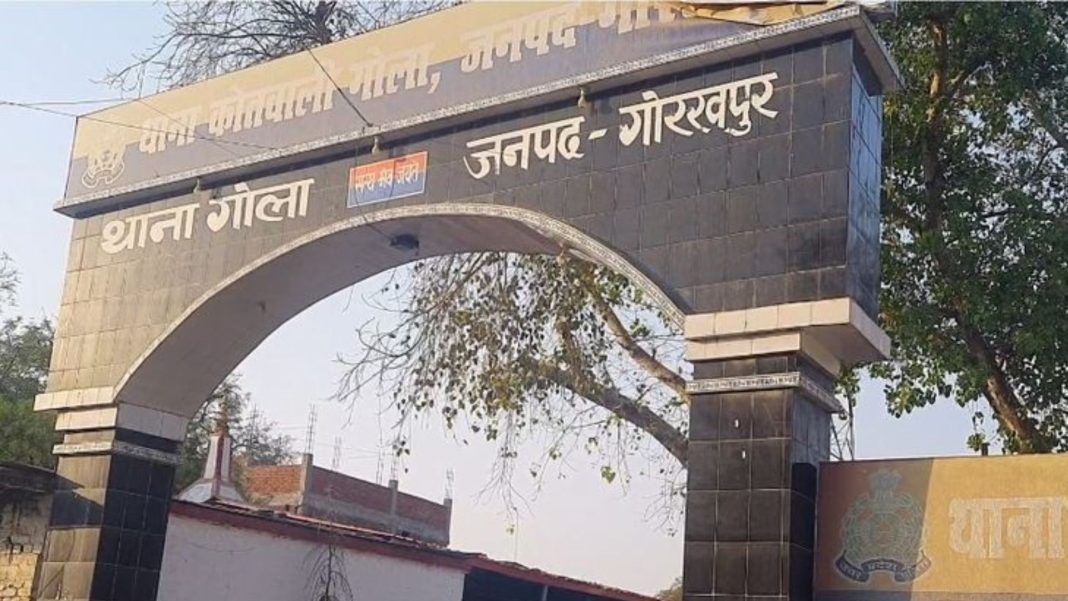

Classroom Conflict turned Crime: What was supposed to be an ordinary morning at a government middle school in Gorakhpur escalated into a volatile confrontation, exposing a deep-rooted conflict in modern Indian education.
The incident, involving a 6th-grade student, an enforcing principal, and an enraged parent, highlights the tension between traditional institutional discipline, modern legal child-protection mandates, and the rising tide of vigilante retaliation.
The Incident: From Morning Tardy to Campus Assault
Classroom Conflict turned Crime: The event occurred at the Purva Madhyamik Vidyalaya in Khirkita Dubey, under the Gola police station jurisdiction. An 11-year-old girl arrived late for the morning assembly. Seeking to enforce institutional punctuality, the officiating principal, Jitendra Kumar, ordered the student to assume the “Murga” position
When the girl returned home and recounted the humiliating ordeal, her father, identified as Dilip Kumar, reacted with intense anger. Armed with indignation, he stormed the school premises, confronted Principal Kumar in his office, and engaged in a heated altercation. The situation rapidly degenerated into physical violence.
According to eye-witness accounts and the police report, the father slapped the principal, tore his shirt, vandalized school property, and issued criminal threats before fleeing the scene. Following a complaint by the school authorities, the Gola Police registered an FIR against Dilip Kumar under relevant provisions of the Bharatiya Nyaya Sanhita (BNS) for physical assault, property destruction, and obstructing a public servant from performing official duties.
Evaluating the Moral Efficiency: Two Wrongs and Total Utility Loss
Classroom Conflict turned Crime: To evaluate this crisis rationally, society must measure the overall well-being and harm generated by each action. In a functional social framework, rules exist to maximize collective benefit, safety, and operational harmony. When evaluated by the net harm produced, both actions in this episode severely eroded social welfare.
- The Principal’s Violation: Short-Term Discipline vs. Long-Term Psychological Cost
| Institutional Objective | Method Used | Net Consequence |
|---|---|---|
| Enforce punctuality and maintain school discipline | Physical punishment through the “Murga” posture | Physical discomfort, psychological humiliation, and potential violation of child-protection and education laws |
Under Section 17 of the Right of Children to Free and Compulsory Education (RTE) Act, 2009, physical punishment and mental harassment in educational institutions are strictly illegal in India.
From a utility perspective:
The Benefit: Instilling 5 minutes of punctuality in a child yields negligible social return.
The Cost: Corporal punishment inflicts bodily pain, damages a developing child’s psychological self-esteem, creates severe anxiety around education, and directly violates human dignity.
By choosing a harmful, illegal method of discipline over constructive, non-violent guidance, the educator introduced net negative utility into the school ecosystem.
- The Father’s Retaliation: Personal Vengeance vs. Institutional Chaos
| Intended Goal | Action Taken | Net Consequence |
|---|---|---|
| Protect the child and address the alleged misconduct | Physical assault, property damage, and intimidation | Disruption of institutional functioning, distress among witnesses, potential criminal proceedings, and further escalation of the conflict |
While a parent’s protective instinct is natural, resorting to street justice completely undermines society’s broader wellbeing.
From a utility perspective:
The Benefit: Temporary emotional release for the parent.
The Cost: The assault disrupted an entire school, terrified young students watching the violence, destroyed public property, and turned a legal victim’s family into perpetrators facing criminal prosecution.
When individuals bypass legal channels, such as filing formal complaints with the Block Education Officer (BEO), Childline (1098), or local police, and substitute law with personal violence, social order breaks down. The immediate harm generated by street violence drastically outweighs any perceived justice achieved.
The Path Forward: Systemic Solutions for Maximum Social Benefit
Resolving such conflicts requires structural mechanisms that prevent both administrative abuse and public lawlessness. To maximize safety, trust, and educational outcomes, institutional reforms must replace primitive disciplinary measures and vigilante violence.
Strict RTE Enforcement & Educator Training: School staff must be trained in modern, non-violent behavioral management techniques. Clear administrative consequences for applying physical stress positions will protect student welfare and eliminate systemic harm.
Transparent Complaint Protocols: Establish fast-track grievance cells within local educational departments. When parents know their complaints against illegal corporal punishment will yield immediate administrative action, the urge to seek extrajudicial revenge disappears.
Legal Accountability Without Exception: Institutional abuses and physical violence must both be dealt with strictly through due process. Enforcement deters future violations on both fronts, preserving the integrity of civil society.
Also Read : ISRO Naughty Boy Rocket Launch: How GSLV-F17 Delivered EOS-05 Earth Observation Satellite