


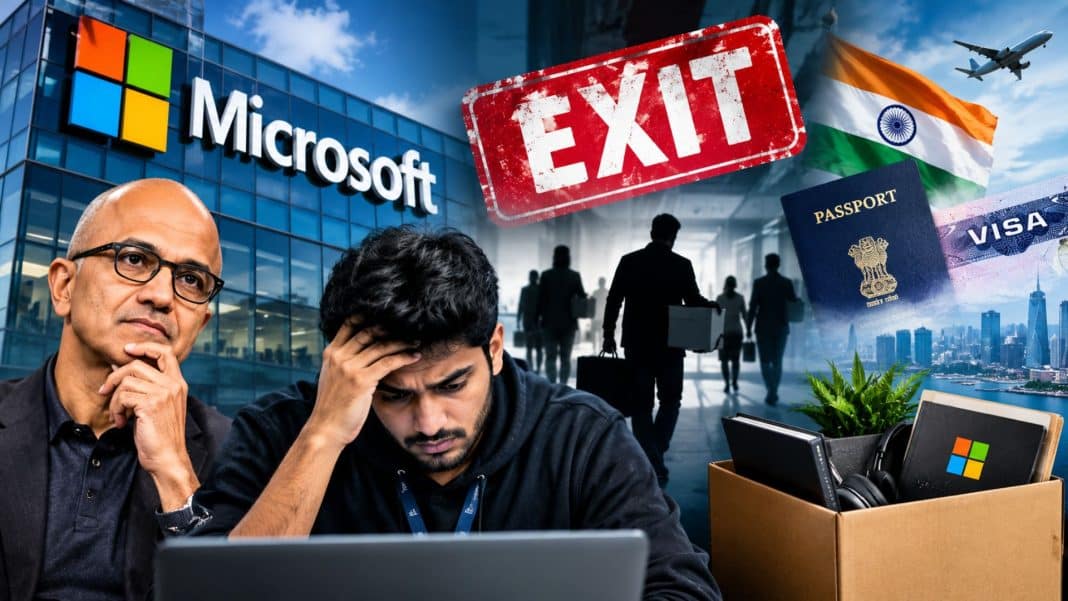

Microsoft’s Mega Exit Scheme: In a major move to restructure its global workforce and manage soaring artificial intelligence (AI) investments, Microsoft has rolled out a sweeping Voluntary Exit Offer (VEO) targeting roughly 60,000 employees across four major markets, the United States, the United Kingdom, Canada, and India.
The decision was officially communicated through an internal memo on Monday, October 26, sent by Microsoft’s Chief People Officer, Amy Coleman.
According to media reports, this initiative marks Microsoft’s second voluntary severance push this year. It reflects an industry-wide pivot toward streamlining operations to fund next-generation infrastructure, data centers, and advanced AI technologies.
Inside the Memo: What Chief People Officer Amy Coleman Stated
Microsoft’s Mega Exit Scheme: In her communication to employees, Chief People Officer Amy Coleman outlined the vision behind the new scheme, emphasizing flexibility and transition support.
“Today, we’re introducing a new Voluntary Exit Offer (VEO) to eligible employees within participating organisations. This offer gives eligible employees who may be considering a future outside the company a new choice to make that transition now with support. It also gives participating organisations another way to adapt their workforce to changing needs,” Amy Coleman wrote in the memo.
Coleman noted that this strategy builds directly on lessons learned from the Voluntary Retirement Programme launched in April, during which over 30% of the 8,750 eligible US staff accepted exit packages.
Eligibility Breakdown: Who Qualifies for the Buyout Package?
Microsoft’s Mega Exit Scheme: The buyout offer covers more than a quarter of Microsoft’s 223,000 global staff. However, eligibility is strictly defined by internal hierarchy and specific organizational divisions:
Internal Level Threshold: Open exclusively to employees at Level 70 and below. This tier covers general managers and select personnel with vice president titles, while excluding corporate vice presidents.
Participating Teams: Staff within AI experiences, Copilot, Xbox, Windows + Devices, Finance, and Human Resources are eligible to participate, as per media reports.
Excluded Units: According to media reports, employees in marketing, security, sales, commercial business, and certain specific core engineering functions are barred from taking part.
Timeline & Deadlines
Decision Deadline: Eligible workers have until early December to accept the buyout terms.
Final Date of Employment: Those who choose to take the offer will officially depart the company on December 31.
What Does This Mean for Indian Employees and H-1B Visa Holders?
With an estimated workforce of around 23,000 employees in India, Microsoft’s global strategy has direct local relevance.
Key Implications:
Impact on Domestic Workforce: While 60,000 global roles fall under the scope of the buyout, the exact proportion of India-based staff qualifying for the program remains unconfirmed by the company.
Challenges for H-1B Visa Holders in the US: For Indian nationals working at Microsoft’s US campuses on H-1B visas, accepting a voluntary exit carries immigration challenges. Workers who opt for the buyout must secure a new sponsoring employer within the standard grace period, adjust their visa status, or prepare to return to India.
Balancing the AI Boom: Rising Costs vs. Financial Discipline
The massive exit program underlines a growing financial challenge across Big Tech. Microsoft, alongside competitors, is pouring hundreds of billions of dollars into capital expenditures, primarily chips, high-performance computing, and specialized AI data centers.
To sustain this heavy spending without diluting financial discipline, tech companies are increasingly using targeted buyouts and structural realignments to optimize payroll overheads.
Tech Sector Trends: A Broader Wave of Restructuring
Microsoft is not alone in executing large-scale workforce changes. Similar measures across the technology industry reflect a broader push for efficiency:
Google: Offered voluntary packages to its Global Business Organisation (GBO) earlier this year, followed by targeted workforce reductions across its Cloud and Threat Intelligence divisions.
Meta: Unveiled plans earlier to reduce headcount by approximately 10% (around 8,000 roles) to streamline operations.
Amazon & Oracle: Continued structural adjustments, with Oracle reducing its global workforce by nearly 13%.
Industry observers point out that while rapid AI integration is changing job descriptions, many tech firms are leveraging this period of transition to rebalance headcounts and control operational costs.
Also Read : UPI MDR Charges Framework: New 0.4% Merchant Fee Introduced Above Rs 2,000 From October 15