


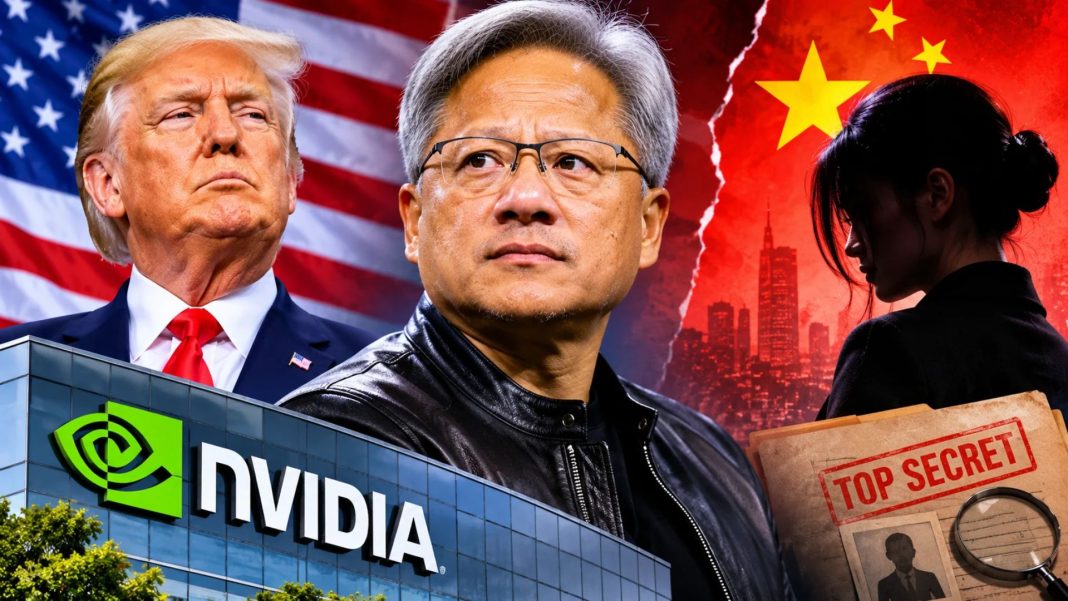

Nvidia Row: According to media reports, President Trump called Huang on November 10, urging him to keep fighting for his job as pressure mounted over allegations of an extramarital affair with a woman suspected of being a Chinese intelligence asset.
While Trump stood firmly behind the tech chief until the very end, even praising him on social media as a on Thursday, the controversy ultimately forced Huang to resign. In an official statement announcing the CEO transition, Nvidia’s board thanked Huang for his “immeasurable contributions” to the company and the industry, naming CFO Colette Kress as interim CEO.
Intelligence Warnings Reportedly Ignored Twice
Nvidia Row:According to media reports citing sources familiar with the matter, US intelligence agencies had reportedly flagged that Huang was involved in an affair with a Chinese woman named Alice Huang, whom officials suspected had been recruited by China’s Ministry of State Security. While Huang had earlier admitted to employees that he had an extramarital affair, President Trump stated that Huang told him he had “absolutely no idea” about any alleged intelligence links. Meanwhile, Beijing has dismissed the espionage allegations as a smear.
President Trump was reportedly briefed on the intelligence findings at least twice, first late last year, and again with a second warning in June. However, Trump chose not to take any action against the Nvidia boss on either occasion. In fact, he even brought Huang along on his official trip to China in May and continued to defend him publicly.
Aides close to the President revealed that Trump viewed the situation simply as a personal extramarital affair rather than a threat to national security. To Trump, the personal scandal did not outweigh the strategic importance of keeping Huang at the helm of America’s most critical artificial intelligence company.
Why Trump Considered Nvidia ‘Too Big to Fail’
Nvidia Row: Behind Trump’s fierce loyalty to Huang was a deep belief that Nvidia’s survival and dominance were directly tied to the strength of the US economy and the stock market.
According to an advisor, Trump had come to view Huang as a “modern-day Henry Ford,” crediting him with pioneering technology that would shape the global economy for decades. When news broke that Nvidia’s board was considering removing Huang as CEO, Trump immediately asked his inner circle how such a move would impact the stock market, fearing a massive sell-off.
Trump also saw Nvidia as the cornerstone of his ambition to keep the United States ahead of China in the global AI race. With Nvidia controlling at least 80% of the market for advanced chips used to train top AI models, the President viewed the company as an indispensable asset that could not be allowed to falter under any circumstances.
From ‘Who Is Jensen Huang?’ to Close Allies
Interestingly, Trump’s admiration for Huang was a relatively recent development. During the Biden administration, when strict export controls were placed on selling American chips abroad, Huang had largely stayed out of Washington politics, even skipping Trump’s second inauguration.
Trump often joked with his aides about the first time he heard Huang’s name, recalling that he had asked, “Who is this? What’s his name?” and then, “What is Nvidia?”
However, by late 2024, Trump had grasped the sheer scale of Nvidia’s influence. Sensing an opportunity, Huang, who understood Trump’s appreciation for personal attention and praise, made a strategic move. In April 2025, Huang attended an exclusive dinner for top tech and crypto investors at Trump’s Mar-a-Lago resort in Florida alongside his wife, Lori.
Following that meeting, Trump’s interest in Huang grew rapidly. The more Trump learned about how AI breakthroughs relied almost entirely on Nvidia’s hardware, the more impressed he became. Trump later famously told Huang, “Jensen, you are taking over the world.”
The AI Boom and U.S. Manufacturing Dreams
During his second term, Trump viewed artificial intelligence not just as a tech race, but as an engine for reviving American manufacturing and creating jobs. Building massive AI data centers required immense amounts of electricity, heavy machinery, and specialized electrical equipment. Trump believed this surge in demand would revitalize American factories and strengthen the broader domestic economy.
Because of this vision, Trump placed AI leaders at the top of his list of vital business figures, with Jensen Huang leading the pack.
Winning the Battle Over China Chip Sales
Huang’s growing influence in the White House was perhaps most visible in policy decisions regarding China. Huang argued that instead of banning chip sales, the US should allow Nvidia to sell its technology to as many countries as possible, including China, so the world would remain dependent on American tech rather than turning to Chinese alternatives.
Backed by White House AI and crypto czar David Sacks, as well as major tech players like OpenAI, Meta, and SpaceX, Huang successfully persuaded Trump to allow Nvidia to sell specific advanced chips to China.
The move angered many of Trump’s own supporters and raised alarms among national security officials. Under the arrangement approved by Trump, the US government initially took a 15% cut of Nvidia’s revenue from these Chinese chip sales, a share that was later raised to 25%. While critics questioned the legality and security risks of the deal, administration insiders were left stunned by how much sway Huang had gained over the President.
Ultimately, however, not even the backing of the Oval Office could shield Huang from the fallout of the intelligence reports and board scrutiny, bringing an abrupt end to his 33-year tenure at one of Silicon Valley’s most influential companies.
Also Read: Tragedy on the Tracks: Egypt Train Collision Leaves 7 Dead and 125 Injured in Giza