


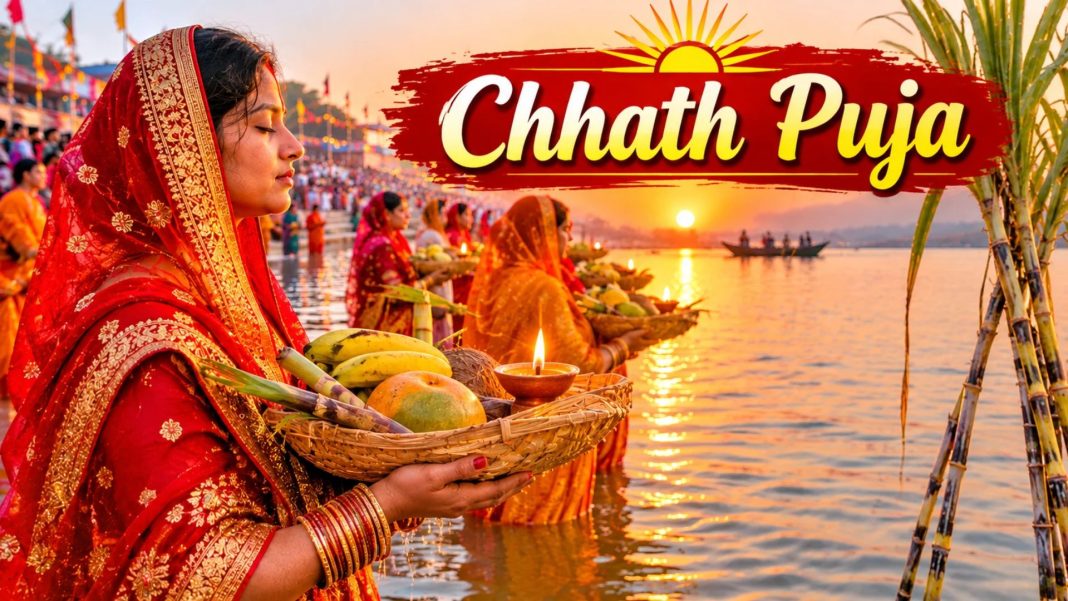

Chhath Puja 2026: Celebrated with immense devotion across Bihar, Jharkhand, eastern Uttar Pradesh, parts of Nepal, and the global Indian diaspora, Chhath Puja stands out as one of the most rigorous and ecologically rooted festivals in the Hindu calendar.
Dedicated to Surya Dev (the Sun God) and Chhathi Maiya, the festival expresses gratitude for sustaining life on Earth while praying for the health, longevity, and prosperity of family members.
According to traditional calendars and media reports, Chhath Puja 2026 will be observed over four days from Friday, November 13, to Monday, November 16.
Unlike many other celebrations marked by elaborate idol worship, Chhath focuses directly on nature, solar energy, and strict physical and mental discipline. It remains unique in Hindu tradition because devotees offer ceremonial prayers (Arghya) not only to the rising sun, but also to the setting sun.
Chhath Puja 2026 Four-Day Calendar and Schedule
Chhath Puja 2026: Observed annually during the Shukla Paksha (bright fortnight) of the lunar month of Kartik, the four-day festival begins on Chaturthi and concludes on Saptami. According to panchang calculations and media reports, the key dates and observances for 2026 are structured as follows:
Day 1 – Nahay Khay (Friday, November 13, 2026): The festival commences with ritual purification. Devotees known as Parvaitins take a holy bath in rivers, ponds, or clean water bodies, thoroughly clean their homes, and prepare a strictly vegetarian sattvik meal. Traditional dishes typically include bottle gourd (lauki), Bengal gram lentils (chana dal), and raw rice (arwa chawal), cooked without onion, garlic, or regular table salt.
Day 2 – Lohanda and Kharna (Saturday, November 14, 2026): On the second day, devotees observe a strict day-long fast without consuming food or water. After sunset, following ritual prayers, the fast is briefly broken with a sacred offering consisting of jaggery-based rice pudding (rasiaav or gud ki kheer) and flatbreads (roti). Immediately after this evening meal, the Parvaitin begins an arduous 36-hour nirjala (waterless) fast.
Day 3 – Sandhya Arghya (Sunday, November 15, 2026): Marking the primary day of Kartik Shukla Shashthi, families spend the day preparing traditional offerings at home. Toward evening, devotees walk barefoot to riverbanks, lakes, or specially constructed community ghats. Standing knee-deep in water, they offer Sandhya Arghya (water, raw milk, and seasonal produce) to the setting sun. In New Delhi, sunset on November 15 is expected around 5:28 PM.
Day 4 – Usha Arghya and Parana (Monday, November 16, 2026): Before dawn on the final day, devotees return to the water bodies to offer Usha Arghya to the first rays of the rising sun (around 6:44 AM in New Delhi). Following the morning prayers and distribution of prasad, devotees conclude their 36-hour fast through the ritual of Parana.
Historical Roots and Scriptural Significance
Chhath Puja 2026: According to cultural historians and religious texts, the traditions of Chhath Puja trace their origins back to ancient Vedic practices honoring Surya, the visible source of light and cosmic energy. Hymns in the Rigveda highlight the reverence of solar energy for human vitality and agricultural abundance.
Folklore and epic traditions also link the observance to the Mahabharata and Ramayana. According to traditional narratives, Karna renowned as the son of Surya Dev performed regular solar prayers while standing in river waters.
Another popular account states that Draupadi and the Pandavas observed the Chhath rituals on the advice of sage Dhaumya to overcome adversity and regain their lost kingdom. Meanwhile, Chhathi Maiya (associated with Goddess Shashthi) is revered as a protective motherly deity who safeguards children from illness and blesses households with harmony.
Traditional Offerings and Eco-Friendly Practices
One of the defining aspects of Chhath Puja is its reliance on biodegradable, natural, and locally harvested materials rather than synthetic decorations. Offerings are meticulously arranged inside handcrafted bamboo winnowing trays (soop) and large woven bamboo baskets (daura).
Key items included in the traditional puja samagri are:
Thekua and Kasar: Thekua a crispy, deep-fried sweet prepared from whole wheat flour, jaggery, and ghee serves as the signature prasad of the festival, accompanied by kasar (sweetened rice flour laddoos).
Seasonal Harvest: Whole sugarcane stalks with intact green leaves, raw turmeric and ginger plants with roots, coconuts, bananas, water chestnuts (singhara), and large citrus fruits (dab nimbu).
Earthen Lamps: Clay diyas fueled by pure ghee, which illuminate riverfronts during evening prayers and the overnight Kosi Bharai ritual.
Across major urban centers including Patna, Varanasi, Ranchi, New Delhi, and Mumbai—civic authorities and local community organizations make extensive arrangements at river ghats and artificial ponds to manage crowds, ensure water cleanliness, and support devotees during the four-day observance.