


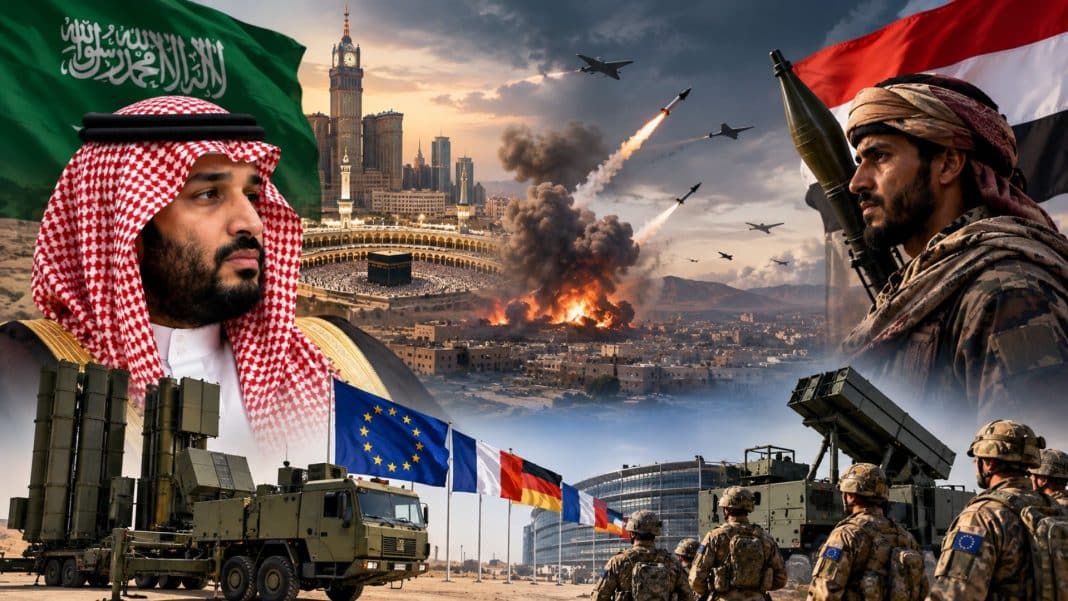

Mecca Agreement Broken: Saudi Arabia faces one of its most vulnerable security situations in years as intense missile and drone strikes by Iran-backed Houthi forces strain its military supplies. Despite signing high-profile security arrangements, Crown Prince Mohammed bin Salman has been forced to request urgent air defense support from European and regional partners.
Critical Shortages Drive Urgent Requests to European Allies
Mecca Agreement Broken: Diplomatic sources indicate that Saudi officials have approached Britain, France, and Egypt for immediate interceptor missile supplies and defensive assistance. Stockpiles of key interceptors have rapidly depleted following a series of aerial bombardments targeting crucial national assets.
While reports suggest contacts were also made with Islamabad, a senior Pakistani official stated that no formal request for direct air defense interceptors or troops was received from Riyadh.
Key Strategic Infrastructure Under Siege
Mecca Agreement Broken: The relentless barrage has struck deep within Saudi territory, disrupting civilian life and vital economic nodes:
Commercial Aviation Grounded: A coordinated missile and drone attack forced the temporary shutdown of King Abdulaziz International Airport in Jeddah, with multiple western cities placed under high alert.
Threats Near Holy Sites: Saudi authorities reported intercepting a Houthi drone operating near Mecca, marking an unprecedented escalation that drew sharp condemnation across the region
Energy Sector Disruptions: Strikes forced the closure of Saudi Arabia’s East-West Pipeline, which carries nearly 4% of global crude oil supplies.
Combined with ongoing disruptions in the Strait of Hormuz and Houthi pressure in the Red Sea, Saudi Arabia’s crucial energy exports are under growing strain.
The Limits of Strategic Guarantees
The ongoing crisis highlights the limitations of Saudi Arabia’s defensive alliances across both traditional and recent partnerships:
Traditional Partner (United States): Reluctant to re-engage directly, Washington faces its own depleted missile inventories. Furthermore, recent direct diplomatic contact with Houthi representatives via Oman has influenced its decision to refrain from offensive action on Riyadh’s behalf.
Trilateral Pact (Mecca Defense Agreement): Despite a mutual defense framework signed with Pakistan and Turkey, the pact currently lacks active operational deployment mechanisms. Partner nations remain cautious about being drawn into a direct cross-border conflict.
Reports indicate Washington declined requests for direct strikes against Houthi targets, leaving Saudi Arabia to manage the incoming threats through broader international assistance.
Diplomatic Pivot Amid Mounting Pressure
With military options constrained and interception capabilities under pressure, Riyadh is balancing defense procurement with tactical diplomacy. Crown Prince Mohammed bin Salman has turned to mediators in Oman and Egypt to explore de-escalation channels and mitigate further risk to the Kingdom’s critical infrastructure.
Also Read : Tensions at Sea: Pakistani Warship PNS Hunain Collides with Indian Navy Vessel in North Arabian Sea