


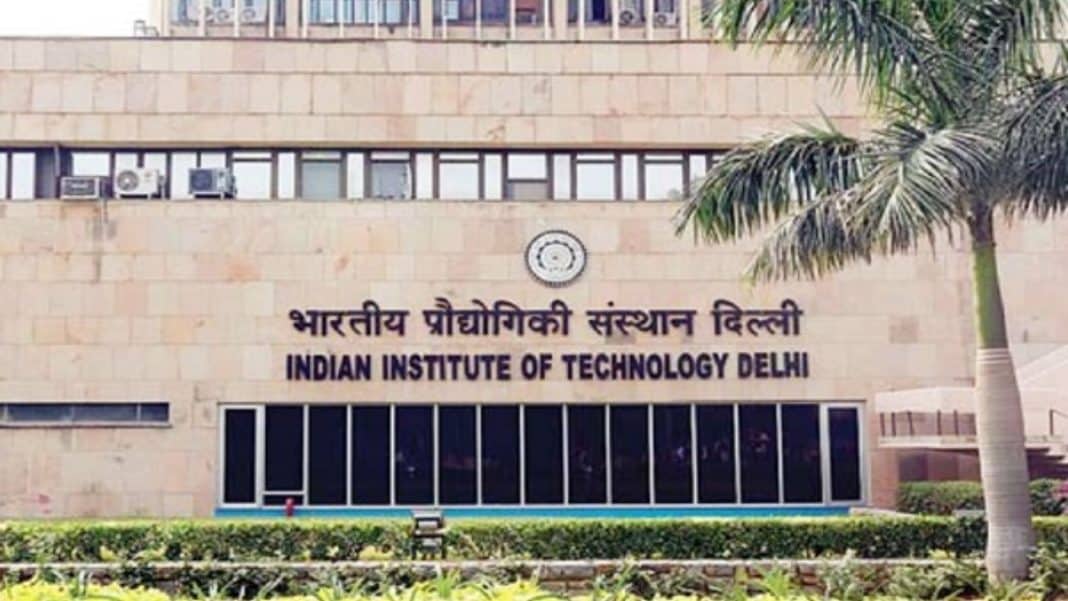

QS World University Rankings 2027: The release of the QS World University Rankings 2027 on June 18, 2026, has triggered the usual wave of celebratory press releases from Indian policymakers and academic heads.
The spotlight remains firmly fixed on the Indian Institute of Technology (IIT) Delhi, which emerged as the country’s top-ranked institution by climbing five places to secure the 118th spot globally.
While institutional PR cells spin this as a historic triumph, a critical look at the comprehensive data reveals a far more sobering and negative reality.
Behind the carefully curated headlines lies an uncomfortable truth: despite decades of promises, high-profile policy overhauls like the National Education Policy (NEP) 2020, and immense national funding, India has once again failed to position a single university within the coveted global Top 100.
Stagnation at the Top and the Fall of IIT Bombay
QS World University Rankings 2027: According to the official ranking data, the domestic battle for supremacy at the peak of India’s academic hierarchy has come at the cost of broader global competitiveness.
While IIT Delhi managed to rise slightly, it merely equaled a past historical ceiling for Indian institutions rather than breaking new ground.
More concerning, however, is the performance of India’s other premier institutions. IIT Bombay, historically a flagship for Indian engineering on the world stage, suffered a clear setback.
The Mumbai-based institute experienced a marginal correction, slipping five places from its previous position of 129th down to 134th globally.
While reports indicate that international employers still value graduates from these institutes with IIT Bombay scoring 97.8 in Employer Reputation this heavy reliance on corporate placement metrics highlights a structural weakness.
Indian universities are functioning excellently as elite training grounds for corporate placement, but they are consistently failing to evolve into world-class research hubs.
Severe Structural Bottlenecks: Faculty Crises and Isolation
QS World University Rankings 2027: The primary reasons keeping India’s elite institutions locked out of the global top tier are deep-rooted structural deficits that the administration has consistently failed to resolve.
According to analysis from the ranking metrics, Indian universities suffer terribly in two core categories: the faculty-to-student ratio and internationalization.
Faculty-to-Student Deficits: Classrooms in even the premier IITs remain heavily overburdened. The rate of institutional expansion and student intake has vastly outpaced the recruitment of qualified, permanent faculty members, severely diluting the quality of mentorship and research guidance.
The Internationalization Failure: Global universities thrive on diverse, international ecosystems. However, India’s premier institutes register near-zero scores when it comes to attracting international faculty ratios and foreign student bodies.
Bureaucratic hurdles, rigid compensation structures, and a lack of global integration mean that institutions like IIT Delhi and IIT Bombay remain localized enclaves, largely cut off from the global academic talent pool.
The Humiliating Comparison with Mainland China
For Indian stakeholders, the most damaging aspect of the QS 2027 rankings is the stark contrast with regional neighbor mainland China.
While Indian policymakers boast about having 52 ranked universities in total, China operates in a completely superior academic stratosphere that exposes India’s slow progress.
Driven by aggressive, multi-decade state funding initiatives such as the “Double First-Class University Plan,” Chinese higher education recorded a massive 72 percent system-wide improvement rate in this cycle.
China now commands 85 heavily ranked universities on the global list. More importantly, its elite institutions have firmly established permanent residency at the absolute top of the global table.
As per the published index, Peking University stands as Asia’s crown jewel at the 13th position globally. While China’s elite tier routinely penetrates the top 20 and top 50, India’s highest-performing university is still struggling to break past the 118th mark.
Marketing Progress Over Real Substance
Ultimately, the QS World University Rankings 2027 serve as a harsh wake-up call that cannot be masked by clever public relations. While institutions like IIT Madras showed local improvement by climbing to 170th, the system as a whole remains trapped behind a glass ceiling.
As long as international institutions like the Massachusetts Institute of Technology (MIT) comfortably maintain the top spot for 15 consecutive years, and regional peers like China consolidate their global dominance, India’s self-congratulatory narrative remains empty.
Until the government addresses severe faculty shortages, fixes structural bottlenecks, and moves beyond using these institutions merely as employment agencies for global corporations, the global Top 100 will remain an unattainable mirage for Indian higher education.
Also Read: Mumbai: The Cruel Reality Behind the viral Versona Beach Video