


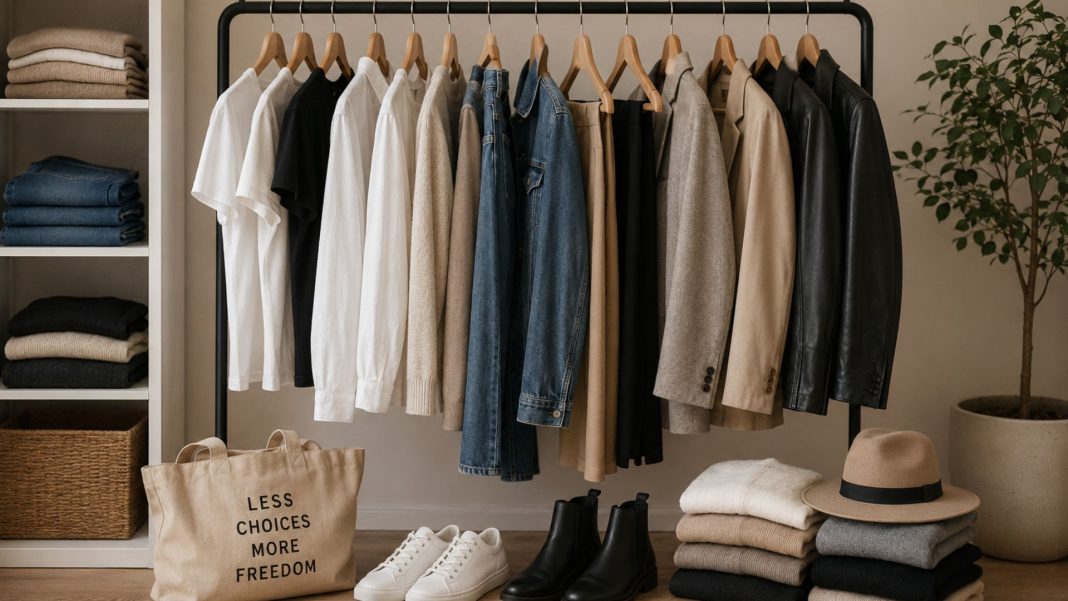

The Capsule Wardrobe Guide: We have all stood in front of a wardrobe packed to maximum capacity and thought, “I have absolutely nothing to wear.” It is a bizarre but incredibly common modern paradox.
In an era dominated by fast-fashion sales, mid-season discounts, and lightning-fast trend cycles, our closets have become physically overwhelmed.
This constant accumulation does not make getting dressed easier; instead, it triggers decision fatigue and unnecessary morning anxiety.
This is exactly why the concept of a capsule wardrobe is experiencing a massive global resurgence.
Far from being a restrictive fashion punishment, adopting a minimalist closet is a lifestyle upgrade that brings daily peace of mind and financial relief.
By shifting your focus from sheer quantity to intentional quality, you can curate a highly functional collection of clothes where every single item fits perfectly, feels comfortable, and looks effortlessly stylish.
What Exactly is a Capsule Wardrobe?
The Capsule Wardrobe Guide: The phrase “capsule wardrobe” was originally coined in the 1970s by London boutique owner Susie Faux, but its core principle remains incredibly relevant today.
At its heart, a capsule wardrobe is a compact, intentionally selected collection of clothing items typically ranging between 30 to 40 pieces, including shoes and outerwear that are designed to be easily mixed, matched, and layered.
The magic of this system relies entirely on interchangeability. Instead of buying individual standalone outfits that only work for one specific occasion, you focus on purchasing versatile separates.
In a true capsule setup, virtually any top you pull out of your closet should effortlessly complement any bottom you choose, maximizing your outfit combinations while minimizing physical clutter.
The Core Benefits of a Minimalist Closet
The Capsule Wardrobe Guide: Transitioning to a curated wardrobe structure offers profound benefits that extend far beyond simple organization:
Elimination of Decision Fatigue: When you remove the ill-fitting, uncomfortable, and outdated clothes from your sight, choosing a daily outfit takes less than two minutes. You start your morning with a clear head rather than wardrobe-induced frustration.
Significant Financial Savings: By stepping off the fast-fashion treadmill, you stop making impulsive, cheap purchases that fall apart after three washes. Instead, you save money over time by investing in durable pieces that last for years.
A Sustainable Environmental Footprint: The fashion industry is a major global polluter. Choosing to wear what you already own and buying fewer, high-quality garments is one of the most effective personal steps you can take to practice eco-friendly living.
A Step-by-Step Guide to Building Your Collection
Creating your very first capsule wardrobe does not mean throwing away everything you own and starting from scratch. It is a mindful process of editing down to what truly serves your life.
Phase 1: The Absolute Empty-Out
Take every single piece of clothing out of your closet, drawers, and laundry baskets. Pile them onto your bed. This visual confrontation forces you to see the exact scale of your physical overload.
Phase 2: The Four-Pile Sorting System
Evaluate every individual item objectively and place it into one of these four defined categories:
The Keep Pile: Items that you absolutely love, wear regularly, and that fit your current body shape perfectly right now.
The Seasonal Pile: Clothes that are functional but completely wrong for the current weather (e.g., heavy winter coats during mid-summer). Store these away in boxes to keep your main closet clear.
The Maybe Pile: Pieces you haven’t worn in six months but feel a sentimental or financial guilt about discarding. Put these in a box and place it out of sight. If you don’t look for them in 30 days, you can safely let them go.
The Donate/Recycle Pile: Clothing items that are in good structural condition but no longer match your personal style should be donated. Anything torn or permanently stained should be sent to a textile recycling unit.
Phase 3: Establishing Your Signature Base
Once you have cleared the clutter, analyze what remains to build your core foundation. A highly versatile starter template generally looks like this:
| Clothing Category | Essential Minimalist Pieces |
|---|---|
| Neutral Tops | • 3 High-quality plain T-shirts (White, Black, Grey)• 2 Classic button-down shirts |
| Versatile Bottoms | • 2 Pairs of perfectly fitted dark denim jeans• 1 Pair of tailored trousers or chinos |
| Layering Elements | • 1 Structured denim or leather jacket• 1 Neutral blazer• 1 Comfortable cardigan |
| Footwear Basics | • 1 Pair of clean white minimalist sneakers• 1 Pair of formal or semi-casual boots/flats |
Maintenance Secrets: How to Avoid Creeping Clutter
Once your streamlined wardrobe is established, the final challenge is keeping it that way. To protect your space from slowly filling back up with impulse buys, implement the strict “One In, One Out” rule.
If you purchase a new jacket or dress, you must commit to donating or recycling an existing item from your current collection.
Additionally, shift your buying mindset from temporary trends to long-term fabric quality. Prioritize natural, breathable materials like cotton, linen, and wool over synthetic fabrics.
By treating your wardrobe as an investment rather than a collection of disposable items, you will find that looking polished, creative, and stylish becomes an effortless, daily reality.
Also Read: Modern Relationship Communication: Why Today’s Connections Are Silently Struggling