


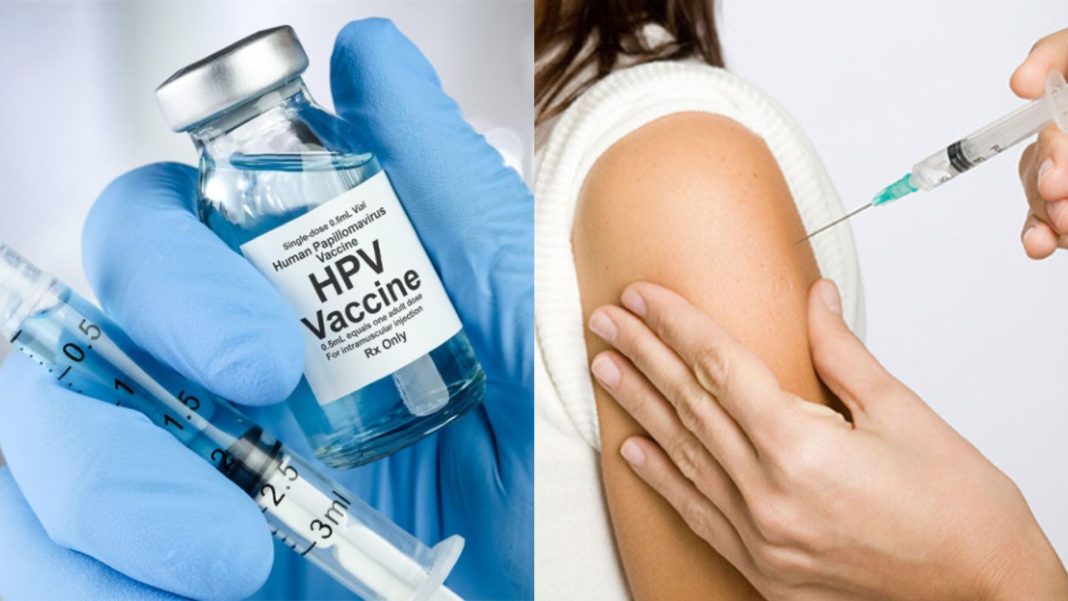

Cervical Cancer Vaccine in India: Cervical cancer is one of the very few cancers that can be almost completely prevented with a vaccine. Yet, it remains the second most common cancer among women in India. Every year, thousands of women lose their lives to this disease a tragedy that is entirely preventable.
Thanks to medical advancements and rising awareness, the Cervical Cancer Vaccine (medically known as the HPV Vaccine) is actively changing the narrative.
Here is a comprehensive, research-backed guide to everything you need to know about who needs it, when to get it, and how India is rolling it out.
What is Cervical Cancer and How Does It Happen?
Cervical Cancer Vaccine in India: Cervical cancer develops in the cervix the lower part of the uterus (womb) that connects to the vagina.
Unlike many other cancers that are genetic, cervical cancer is almost exclusively caused by a viral infection. The culprit is the Human Papillomavirus (HPV), specifically the high-risk strains HPV-16 and HPV-18.
How it spreads: HPV is an incredibly common virus transmitted through close skin-to-skin intimate contact.
Most adults contract it at some point in their lives. While the immune system clears the virus naturally in most people, a persistent infection in some women causes normal cervical cells to slowly mutate into cancerous cells over a period of 15 to 20 years.
The Ultimate Shield: What is the HPV Vaccine?
Cervical Cancer Vaccine in India: The HPV vaccine works by training the immune system to recognize and destroy the virus before it can cause cellular damage. In India, there are three main types of vaccines available:
Cervavac: Developed by the Serum Institute of India (SII), this is India’s first indigenous quadrivalent vaccine. It protects against four major HPV strains (6, 11, 16, and 18) and is highly affordable.
Gardasil (Quadrivalent): Protects against the same four strains.
Gardasil 9 (Nonavalent): An advanced vaccine that protects against nine strains of HPV, offering the broadest available protection.
The Ideal Age: When Should You Get Vaccinated?
The vaccine is most effective when given before any exposure to the virus (i.e., before a person becomes sexually active). Clinical research shows that young immune systems produce a significantly higher count of antibodies in response to the vaccine.
The dosage and effectiveness vary according to different age brackets:
The Ideal Window (Ages 9 to 14 Years): This is the most recommended age group. It requires a 2-dose schedule give n at a 6-month interval. At this stage, the young immune response is at its peak, providing near-100% protection against the targeted HPV strains.
The Catch-Up Phase (Ages 15 to 26 Years): If a person missed getting vaccinated during childhood, they can still get it during this phase. It requires a 3-dose schedule given at 0, 1–2, and 6 months. The vaccine remains highly effective during this period.
Later Adulthood (Ages 27 to 45 Years): Women in this age group require a 3-dose schedule. However, the vaccine is only moderately effective here, and it is highly recommended to consult a gynecologist first, as protection is lower if exposure to the virus has already occurred.
The Ground Reality: Statistics in India vs. Worldwide
The statistical burden of cervical cancer highlights exactly why mass vaccination is an urgent necessity.
Worldwide, around 660,000 new cases are diagnosed every single year. Shockingly, India accounts for a massive chunk of this burden with nearly 130,000 new cases annually.
This means roughly 1 in every 5 global cervical cancer cases comes from India. The mortality rate is equally devastating, causing around 77,000 deaths every year in the country which tragically translates to losing one Indian woman to this disease every 7 minutes.
Globally, countries like Australia and the UK that implemented school-based HPV vaccination programs over a decade ago are currently on track to completely eliminate cervical cancer in the near future. India is trying to replicate this massive public health success.
Government Initiatives: Where Can You Get the Vaccine Free or Discounted?
The government has been working aggressively to integrate the HPV vaccine into the National Immunization Dashboard.
The Pioneer State: Sikkim
Sikkim became the first state in India to launch a state-funded, free HPV vaccination drive targeted at schoolgirls aged 9 to 14. Due to this early grassroots adoption, Sikkim boasts the highest vaccination coverage rate in the country.
Expansion Across Other States
Following Sikkim’s success, states like Delhi launched targeted vaccination programs through state clinics.
Major rollouts and pilot programs have rapidly expanded across states with high cancer burdens, including Karnataka, Tamil Nadu, Maharashtra, Uttar Pradesh, and West Bengal, frequently utilizing schools as immunization camps.
How to Access the Vaccine
Government Sector: In states where the rollout is integrated into the public healthcare system, girls aged 9–14 can get vaccinated completely free of cost at designated government hospitals, primary health centers (PHCs), and government school camps.
Private Sector: For individuals outside the government-targeted age bracket (ages 15 to 45), the vaccine is readily available across all major private hospitals and gynecological clinics in India.
While imported vaccines cost between ₹4,000 to ₹10,000 per dose, India’s indigenous Cervavac is available at a fraction of that cost (around ₹2,000 or less per dose in private markets).
Treatment and Beyond: The Role of Screening
It is vital to note that the vaccine is preventative, not curative. It cannot treat an existing HPV infection or fully formed cervical cancer.
If a woman is diagnosed with cervical cancer, treatment options depend on the stage and include surgery (including a hysterectomy), radiotherapy, and chemotherapy.
The Golden Rule: Because the vaccine does not cover every single rare strain of HPV, regular cervical screenings are mandatory even for vaccinated women.
Women aged 21 to 65 should get a Pap smear test every 3 years, or an HPV DNA test every 5 years, to catch any abnormal cellular changes early.
Preventing cervical cancer is entirely within our hands. If you have a daughter, sister, or relative between the ages of 9 and 14, prioritize getting them their two doses of the HPV vaccine it is quite literally a gift of life.
Also Read: Understanding PCOD & PMOS (Formerly PCOS): How to Conceive and Manage Your Pregnancy Journey