


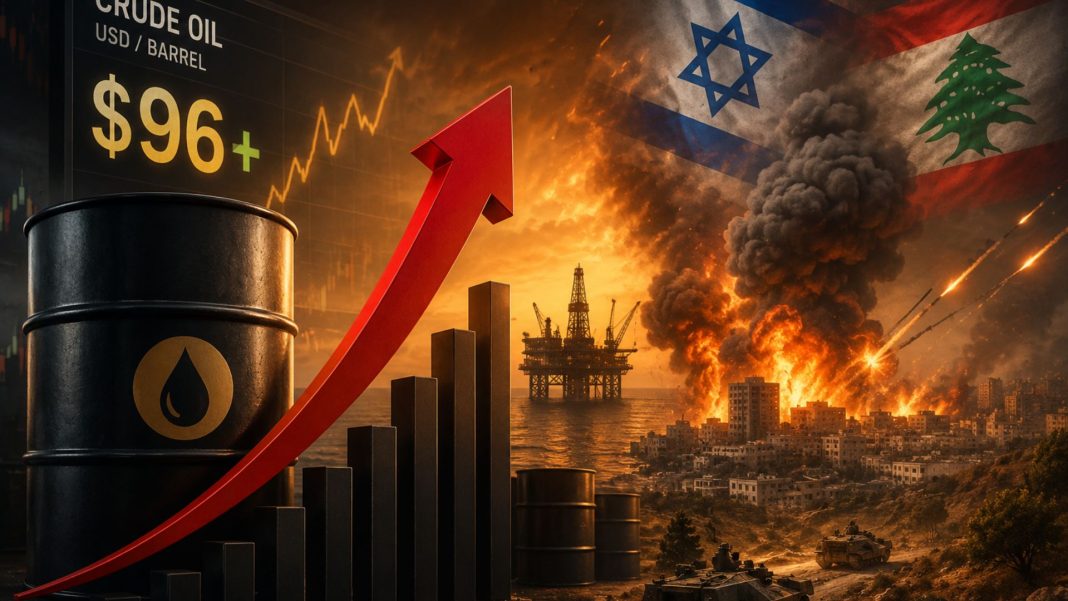

OIL SHOCK: Global energy markets were thrown into chaos on Monday as crude oil prices surged by over 3%, wiping out previous losses. The sudden spike comes on the heels of fresh Israeli airstrikes in Lebanon and retaliatory missile attacks from Iran, shattering fragile ceasefire hopes and reigniting fears of a catastrophic blockade at the Strait of Hormuz.
By early morning trade, the global benchmark Brent crude jumped 3.45% to hit $96.30 per barrel, while the US benchmark WTI (West Texas Intermediate) crude climbed 3.41% to sit at $93.63 per barrel.
The Broken Ceasefire: Why Markets are Panicking
OIL SHOCK: Only days ago, traders were breathing a sigh of relief. A diplomatic breakthrough had fueled hopes that a June 3 ceasefire between Israel and Hezbollah would pave the way for a historic peace deal between Washington and Tehran.
That optimism has now evaporated.
The Weekend Flare-up: Despite the truce, Israel launched heavy airstrikes on Beirut over the weekend.
The Iranian Retaliation: Iran responded directly by firing a volley of missiles at Israel, escalating a localized conflict into a dangerous regional showdown.
The Diplomatic Gridlock: Tehran has made a sustained Lebanese ceasefire a non-negotiable condition for any broader nuclear or economic roadmap with the US. With the truce in tatters, diplomatic channels have frozen.
Flashpoint Hormuz: The Ultimate Energy Chokepoint
The biggest nightmare for oil traders isn’t just local fighting, it is the looming threat over the Strait of Hormuz. This narrow strip of water separating the Persian Gulf from the open ocean is the world’s most critical energy artery.
Hormuz by the Numbers:
20% (One-Fifth): Of the world’s total petroleum consumption passes through this strait.
LNG Hub: A massive chunk of global liquefied natural gas shipments relies entirely on this route.
Iran has already restricted and disrupted maritime traffic through the strait earlier this year. Analysts warn that a prolonged blockade or active military hostility in these waters would instantly choke global supply, triggering an unprecedented energy crisis.
The OPEC+ Dilemma: Why More Supply Isn’t Helping
OIL SHOCK: In a bid to calm the jittery markets, OPEC+ (the alliance of major oil-producing nations) stepped in on Sunday, agreeing to increase oil production for the fourth time in four months. Under normal economic conditions, this extra supply would cool down prices.
This time, the market completely ignored the move. Experts say the OPEC+ decision is “too little, too late” due to major operational hurdles:
Middle East Infrastructure: The ongoing regional conflict makes it incredibly difficult for member nations to safely scale up and transport extra supply.
The Russian Factor: Russia is facing its own severe production and logistics challenges following recent strikes on its energy infrastructure.
Fear Over Volume: Geopolitical panic and the threat of a supply shutdown are completely overriding the physical addition of extra barrels to the market.
“In the current market environment, the material impact of the OPEC+ decision will be close to zero,” noted Jorge Leon, Head of Geopolitical Analysis at Rystad Energy.
Next Stop, $100? Where Crude Goes From Here
Energy analysts believe the market is currently pricing in a prolonged period of high-risk uncertainty.
The Bear Case (Prices Fall): If the US successfully brings Iran and Israel back to the negotiating table, or if a permanent ceasefire is enforced, the “risk premium” will vanish, pulling Brent back down to the mid-$80s.
The Bull Case (Prices Rocket): If Israel and Iran enter a direct, sustained war of attrition and the Strait of Hormuz is shut down, Brent crude is widely expected to blast past $100 per barrel and potentially scale multi-year highs.
The Indian Impact: Growth, Inflation, and Rupee Under Threat
The escalating crisis in Western Asia has sent alarm bells ringing in New Delhi. India is uniquely vulnerable to global oil shocks because it imports more than 85% of its crude oil requirements.
The Domino Effect on India’s Economy:
The Import Bill: Every dollar increase in crude prices inflates India’s trade deficit, draining foreign exchange reserves.
Currency Pressure: A rising import bill puts immediate downward pressure on the Indian Rupee (INR), making it weaker against the US Dollar.
Corporate Pain: High input costs will severely dent profit margins for high-energy sectors like Aviation (Aviation Turbine Fuel), Logistics, Paints, Chemicals, and Manufacturing.
If crude oil locks itself comfortably above the $100 mark, Indian policymakers will face a double whammy: tackling sticky domestic inflation while trying to sustain economic growth. For now, India, alongside the rest of the consuming world, keeps its eyes glued to the volatile waters of the Strait of Hormuz.
Also Read : MIDDLE EAST MELTDOWN: Two-Month Ceasefire Collapses as Iran and Israel Trade Heavy Missile Strikes