

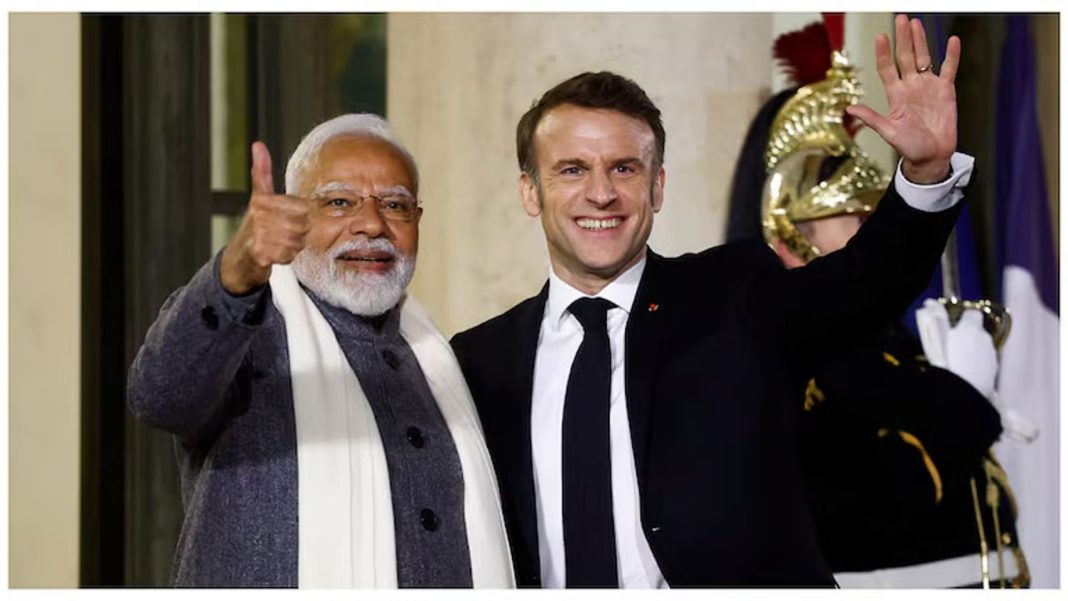

G7 Summit: As the world’s most powerful economic leaders gather in Evian-les-Bains, France, for the 52nd G7 Summit from June 15 to 17, one non-member country is stealing the global spotlight: India. French President Emmanuel Macron has made Prime Minister Narendra Modi’s attendance a “top priority.”
While the world focuses on the official G7 schedules, a deeper diplomatic mystery is unfolding behind the scenes. High-level French diplomatic sources have revealed that Paris is aiming for a highly ambitious list of “12 secret deliverables” during PM Modi’s visit.
What exactly are these 12 goals, and why is France so determined to put India at the absolute center of a Western-dominated block?
Why Is India a ‘Top Priority’ for France at the G7?
G7 Summit: France and India share a unique relationship built on deep geopolitical trust. French diplomatic sources state that inviting India to participate in all official sessions, a privilege rarely given to non-member nations, is driven by two core beliefs:
Unmatched Diplomatic Trust: The level of trust between New Delhi and Paris allows both nations to speak freely on highly sensitive global issues without diplomatic hesitation.
Global Solutions via India: France firmly believes that when India finds a solution to a domestic problem, it becomes a scalable blueprint for the entire world.
With India also holding the influential BRICS chair this year, Macron views PM Modi as the ultimate bridge between the Western G7 nations and the global global-south community.
France's 6 Core Focus Areas for G7 2026 - Economic Imbalances (Countering China’s overproduction)
- International Partnerships (Building a new consensus)
- Online Safety (Regulating AI & under-16 social media bans)
- Critical Minerals (Securing vulnerable supply chains)
- Global Health (Advancing joint cancer research)
- Global Security (Stopping financial crime & human trafficking)
What Are the ’12 Mysterious Deliverables’ France Wants to Achieve?
G7 Summit: The biggest talking point among diplomats is France’s highly classified roadmap of “12 achievements” it hopes to finalize during PM Modi’s stay.
While the exact details remain strictly under wraps until official MoUs are signed, sources confirm that the agenda will transcend traditional defense buyers’ agreements.
Unlike standard trade pacts, Paris insists this is a relationship of absolute equals. The core of these upcoming agreements will rely heavily on India’s ‘Make in India’ initiative.
Rather than a simple purchase agreement, any new defense deals, including ongoing discussions around Rafale fighter systems, will focus on integrating local Indian weapon systems.
Furthermore, civil nuclear cooperation is set to enter a brand-new phase, signaling a massive shift in how both nations manage future energy and technology sharing.
The Push for ‘Strategic Autonomy’ in the Trump Era
The underlying urgency of the Macron-Modi meeting stems from a rapidly shifting global order dominated by US President Donald Trump’s second term.
With unpredictable trade tariffs and a direct US military confrontation with Iran heavily impacting the global economy, both France and India find their traditional foreign policy stances challenged.
Both nations have historically been strong champions of “Strategic Autonomy”, the idea that countries should make independent decisions rather than blindly following a superpower’s dictates.
While Trump has openly criticized Macron’s push for European independence, French diplomats are using Europe’s vulnerabilities to justify their alliance with India.
“Who would have thought a major ally of Europe would consider buying a territory of Europe [Greenland]?” a French diplomatic source noted to media outlets. “Strategic autonomy is essential for us. It explains how we built a strong defense mechanism, which is exactly what India is doing.”
From Rafale Jets to Student Visas: The Secret Beyond Defense
While defense hardware often dominates headlines, the true surprise of this summit lies in the massive expansion of civil and educational ties.
France has officially launched a grand plan to open its doors to 30,000 Indian students by 2030 (up from the current 12,000). To ensure this plan succeeds, top diplomats from both sides are actively working to resolve long-standing friction points, including visa issuance delays and extension procedures.
Paris wants to prove that a true “global strategic partnership” cannot survive on military contracts alone; it requires deep, cross-border connection between civil societies, researchers, and young students.
Can France and India Build a New Global Consensus?
As President Macron prepares to host the opening G7 dinner, the stakes could not be higher. From tackling China’s massive industrial overproduction to managing the social media bans for children under 16, France knows it cannot solve these challenges alone.
By tying its G7 goals directly to India’s geopolitical weight, France is attempting to create a new international consensus that resists external superpower pressures.
Whether the “12 secret deliverables” will successfully redefine global diplomacy remains a mystery, but one thing is certain: the road to a balanced global order now runs straight through Paris and New Delhi.
Also Read : Trump vs. Iran: Is a Real Peace Deal Coming This Weekend, or Is It Just a Political Game Plan ?