


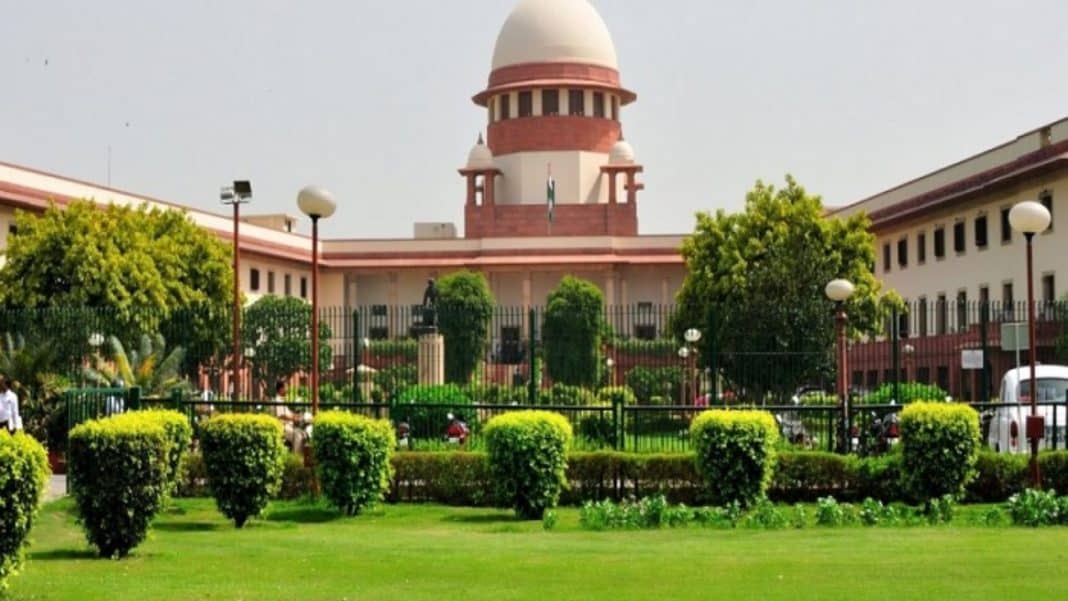

Consumer Protection Act: In a landmark decision safeguarding the interests of millions of healthcare seekers, the Supreme Court of India has firmly refused to reconsider its historic 31-year-old framework that holds doctors and hospitals accountable under the Consumer Protection Act (CPA).
A five-judge Constitution Bench, comprising Justice Vikram Nath, Justice B.V. Nagarathna, Justice M.M. Sundresh, Justice Prashant Kumar Mishra, and Justice K.V. Viswanathan, unanimously dismissed a curative petition seeking an overhaul of the medical negligence landscape.
The curative petition, filed by Dr. Rajeev D. Joshi on behalf of the Medico Legal Society of India, made a final attempt to overturn the historic 1995 judgment. However, the top court ruled that the petition failed to meet the strict legal criteria required for curative intervention, effectively putting a permanent seal on medical accountability under consumer forums.
THE LEGAL BACKDROP: DUSTING OFF THE 1995 BENCHMARK
Consumer Protection Act: The controversy traces back to November 13, 1995, when a pathbreaking Supreme Court ruling in Indian Medical Association (IMA) v. V.P. Shantha & Others established that medical consultation, diagnosis, and treatment provided for a fee qualify as a “service” under consumer law.
Since that landmark decision, patients alleging medical negligence or deficiency in clinical care have enjoyed direct access to fast-track Consumer Redressal Commissions rather than navigating protracted civil court battles.
Key Pillars of the 1995 V.P. Shantha Framework:
Paid Treatments Covered: Any medical service rendered against monetary consideration falls directly under the ambit of consumer law.
Free Services Exempted: Healthcare provided completely free of charge to all patients in government or charitable facilities remains outside the scope of CPA.
Institutional Accountability: Private hospitals, nursing homes, diagnostic labs, and individual practitioners are equally accountable for deficient service.
WHY THE MEDICAL COMMUNITY DEMANDED EXEMPTION
Consumer Protection Act: The recent push by medical associations gained major momentum after the Supreme Court delivered a separate judgment exempting lawyers and legal professionals from the Consumer Protection Act.
Encouraged by the legal profession’s immunity, healthcare organizations argued that medical practitioners deserved similar treatment.
Core Arguments Raised by Doctors:
The Lawyers’ Parity Claim: Medical bodies contended that if lawyers cannot be sued under consumer law for a lost case, doctors should not face consumer suits for an unsuccessful treatment outcome.
Rise of Defensive Medicine: Doctors cautioned that consumer litigation forces clinicians to order excessive diagnostic tests and costly procedures solely to protect themselves from lawsuits.
Erosion of Doctor-Patient Trust: Continuous legal exposure turns a compassionate healing relationship into an adversarial transaction.
THE SUPREME COURT’S RATIONALE: WHY DOCTORS ARE DIFFERENT
Addressing the comparison between lawyers and medical professionals, the apex court clarified that the legal profession possesses a unique, sui generis standing connected directly to the administration of court justice.
The bench noted that the exclusion granted to advocates cannot serve as a automatic precedent to reopen established laws governing healthcare services. Dismissing the petition under the principles of Rupa Ashok Hurra v. Ashok Hurra, the bench concluded that no valid grounds existed to disturb a settled legal precedent.
WHAT THIS VERDICT MEANS FOR PATIENTS & DOCTORS
- For Common Patients:
Direct Grievance Redressal: Patients retain an accessible, affordable, and specialized platform to seek compensation for medical errors, surgical lapses, or hospital neglect.
Deterrence Against Negligence: Ensures healthcare institutions adhere to safety protocols, sanitary standards, and transparent clinical care.
No Unfair Advantage: Protects consumers who pay out-of-pocket for private medical care.
- For Healthcare Practitioners:
Unfavorable Outcome ≠ Negligence: The ruling does not mean every failed treatment constitutes medical negligence.
Protection via the Bolam Test: Courts continue to rely on established legal tests (Jacob Mathew case). A doctor is not liable if they acted in accordance with accepted medical practices supported by a responsible body of clinical peers.
Emphasis on Clear Documentation: Doctors must ensure meticulous medical record-keeping, detailed procedure notes, and clear written informed consent to defend their clinical choices.
A STRIKING BALANCE BETWEEN ACCOUNTABILITY AND HEALING
By shutting the door on further challenges to the 1995 V.P. Shantha ruling, the Supreme Court has reaffirmed that consumer rights in healthcare are here to stay. While the medical fraternity continues to voice concerns regarding defensive medicine, the judiciary’s stance prioritizes patient safety and systemic accountability, ensuring that medical care remains bound by trust, competency, and legal responsibility
Also Read : Bihar Crime News: Son Attacks Father Over Substance Abuse Money in Samastipur