


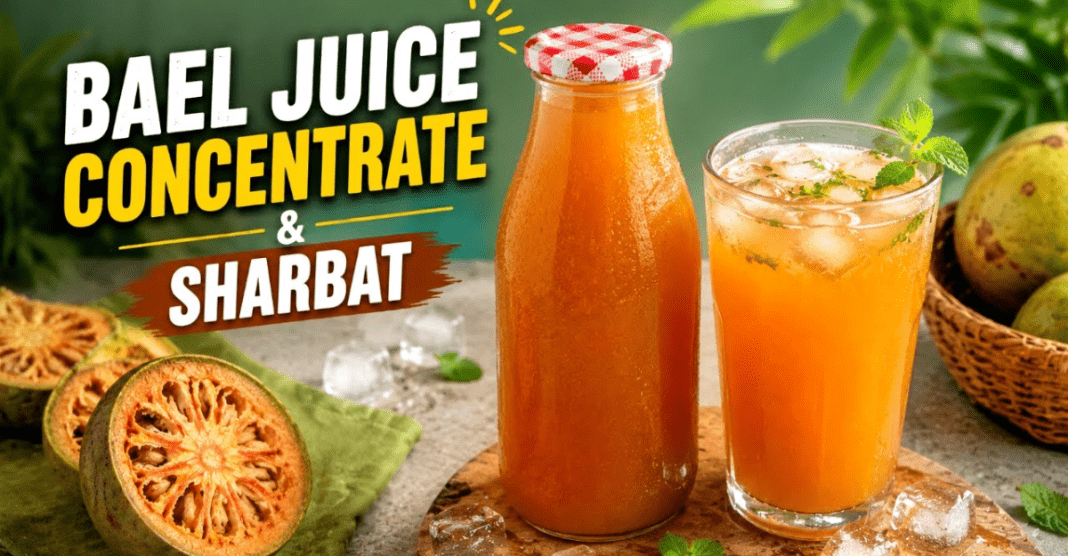

Bael Sherbat: As temperatures soar across India every summer, one traditional beverage quietly makes its return to homes, roadside stalls, and local markets, bael sherbat.
While social media wellness trends and viral recipes have recently revived interest in this age-old cooler, its importance goes far beyond online popularity.
For generations, bael sherbat has been valued not only for its refreshing taste but also for its deep connection to Ayurveda, nutrition, and India’s cultural traditions.
In today’s extreme heat conditions, this natural drink is once again proving why it has remained relevant for centuries.
The Sacred Fruit Behind the Drink
Bael, scientifically known as Aegle marmelos, is a fruit native to India and parts of Southeast Asia.
Popularly called wood apple, Bengal quince, or golden apple, the fruit is known for its hard outer shell and aromatic orange pulp packed with seeds.
The bael tree holds spiritual significance in India and is considered sacred in Hindu and Buddhist traditions.
Beyond religion, however, the fruit has long been woven into regional food cultures, especially in states like Bihar, Uttar Pradesh, Odisha, West Bengal, Madhya Pradesh, and Rajasthan.
Bael Sherbat: In Odisha, for example, bael juice, locally called Bela Pana, is traditionally prepared during Maha Vishuva Sankranti, marking the Odia New Year.
Across many Indian households, drinking bael sherbat during summer has been seen as a natural way to stay cool and maintain internal balance.
Why Bael Sherbat is Considered a Natural Summer Remedy
One of the biggest reasons behind the popularity of bael sherbat is its natural cooling effect on the body.
During intense heatwaves, dehydration and fatigue become common problems, and bael offers a simple, traditional solution.
Rich in water content, fibre, and essential nutrients, the drink helps regulate body temperature while keeping the body hydrated.
Many health experts also believe that bael can help reduce the risk of heat exhaustion during peak summer months.
Unlike sugary carbonated beverages, bael sherbat provides nourishment along with hydration, making it both refreshing and beneficial.
A Fruit Packed With Health Benefits
Bael Sherbat: Bael is often described as a powerhouse of nutrition due to its rich combination of vitamins, minerals, antioxidants, and fibre.
One of its most well-known advantages is its ability to support digestion.
The fruit contains dietary fibre that helps improve bowel movements and prevent constipation.
Traditionally, bael has also been used to ease acidity, indigestion, and stomach discomfort.
Many people prefer consuming fresh bael juice on an empty stomach to calm the digestive system.
Apart from digestive support, bael is also believed to strengthen immunity because of its vitamin C and antioxidant content.
Bael Sherbat: These nutrients may help the body fight infections and recover from seasonal illnesses more effectively.
Its low glycemic index has further increased interest in the fruit among health-conscious individuals.
Some studies suggest that compounds found in bael may help improve insulin sensitivity when consumed without excessive sugar, making it a potentially beneficial option for people managing diabetes.
Bael also contributes to heart health. Its potassium content may help regulate blood pressure, while the fibre present in the fruit supports healthier cholesterol levels.
In addition, the fruit is considered helpful for detoxification. Traditionally, bael has been believed to assist the liver and kidneys in removing toxins while supporting overall metabolism.
The antioxidants present in bael may also improve skin and hair health by reducing oxidative stress and promoting a natural glow.
Why Younger Generations Are Rediscovering Bael
Bael Sherbat: Recently, celebrity chefs and wellness influencers have brought bael sherbat back into the spotlight through social media recipes and health-focused content.
This renewed attention has introduced younger audiences to a drink that many Indian families have consumed for decades.
As modern consumers increasingly look for natural alternatives to processed drinks, traditional beverages like bael sherbat are experiencing a revival.
Simple Homemade Bael Sherbat Recipe
Preparing bael sherbat at home is both easy and refreshing.
Ingredients
- 1 large bael fruit
- ½ teaspoon roasted cumin powder
- Black salt as per taste
- 2–3 tablespoons powdered sugar
- Ice cubes
- Chilled water
Method
Break open the bael fruit and remove the pulp. Mix the pulp with chilled water and mash it thoroughly. Strain the mixture to remove fibres and seeds. Add roasted cumin powder, black salt, and powdered sugar, then stir well.
Pour the drink into glasses filled with ice cubes, top with chilled water, and serve cold.
A Traditional Drink That Still Stands Strong
Despite changing food trends and the rise of packaged beverages, bael sherbat continues to hold its place as one of India’s most trusted summer drinks. Its blend of nutrition, hydration, traditional wisdom, and cultural significance makes it much more than a seasonal refresher.
As heatwaves become harsher every year, ancient drinks like bael sherbat are reminding people that some of the best health solutions have existed in Indian kitchens all along.