


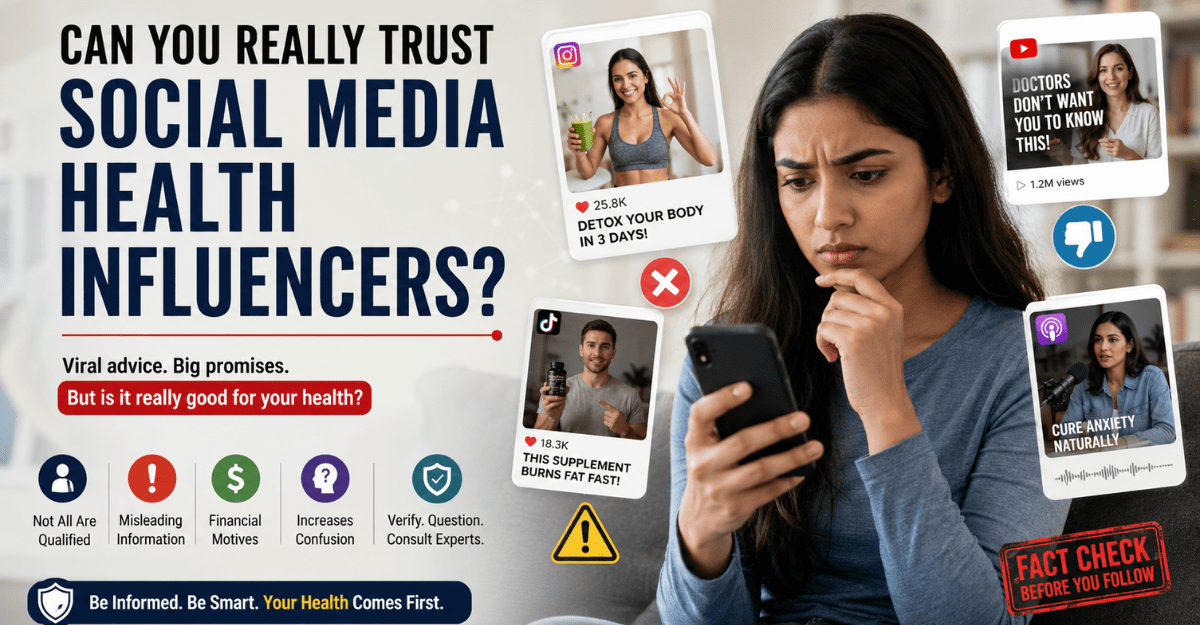

Social Media: From fitness hacks and diet plans to mental health tips and wellness routines, social media has become the go-to source for health advice for millions of people.
Platforms like Instagram, TikTok, YouTube, and podcasts are flooded with influencers claiming to offer life-changing health guidance.
But as the popularity of these “health gurus” continues to rise, experts are warning users to be more cautious about what they consume online.
A recent survey has revealed just how deeply social media now influences public health decisions.
According to the report, nearly 4 out of 10 adults in the United States rely on social media or podcasts for health-related information.
Among younger people under 50, that number is even higher, showing how digital platforms are slowly replacing traditional medical consultations for many users.
Not Every Health Influencer Is a Qualified Expert
Social Media: Researchers studied more than 6,800 health and wellness influencers with large online followings. Surprisingly, only around 40 percent of them mentioned having any professional medical or healthcare background.
Many others identified themselves as “coaches,” entrepreneurs, or simply people sharing personal experiences.
Experts say this is where the danger begins. Having thousands or even millions of followers does not automatically make someone medically qualified.
In many cases, influencers gain credibility simply because they appear confident, fit, or relatable — not because they possess scientific knowledge or professional training.
Emotional and Shocking Content Spreads Faster
Social Media: Social media algorithms often reward dramatic, emotional, or controversial content.
Videos with titles like “Doctors Don’t Want You to Know This” or “This One Habit Is Destroying Your Health” tend to attract millions of views quickly.
Health experts warn that fear-based or sensational content should immediately raise red flags. Reliable medical information is usually balanced, evidence-based, and cautious, not exaggerated for clicks and engagement.
People who feel ignored by the healthcare system or cannot easily access medical care may become especially vulnerable to believing misleading online advice.
What starts as curiosity can quickly turn into misinformation.
Viral Advice Is Increasing Confusion
The report also found that while many users felt social media helped them understand their health better, a significant number admitted it left them feeling more confused than informed.
This confusion often comes from conflicting opinions online.
One influencer promotes a certain diet, another completely rejects it, and a third claims a miracle solution exists.
Without medical knowledge, it becomes difficult for users to separate facts from trends.
Mental health professionals also caution against self-diagnosing based on short videos or viral posts.
Watching relatable content online does not replace a professional medical evaluation.
Health Content Has Become a Business
For many influencers, social media is not just a hobby, it is a full-time business.
Sponsored posts, affiliate marketing, brand partnerships, and paid promotions have turned health content into a highly profitable industry.
Experts stress that financial incentives can sometimes influence the type of advice being shared.
While not every sponsored recommendation is misleading, viewers should always ask whether an influencer may be promoting something primarily for profit.
Transparency matters. Ethical creators usually disclose paid partnerships clearly and avoid making unrealistic promises about products or treatments.
Passive Scrolling Makes Misinformation Easier to Consume
Another major concern is how people encounter health information online.
Most users are not actively researching medical topics, they simply come across videos while scrolling.
Algorithms are designed to keep users engaged, meaning controversial or emotionally charged content is more likely to appear repeatedly.
Over time, this can create an echo chamber where misinformation feels convincing simply because it is constantly repeated.
Experts recommend actively managing social media feeds by hiding harmful content, checking sources carefully, and avoiding creators who rely heavily on fear or extreme claims.
Always Verify With a Trusted Medical Professional
Doctors and healthcare professionals agree on one important point: social media can be useful for awareness, but it should never replace professional medical advice.
Influencers do not know a person’s complete medical history, health conditions, or personal circumstances.
A licensed healthcare provider, however, is legally and ethically responsible for the guidance they provide.
Before making any major decision about your health, experts strongly recommend consulting a qualified medical professional instead of relying solely on online trends.
In the Digital Age, Awareness Is the Best Protection
Social media has made health information more accessible than ever before, but it has also made misinformation easier to spread.
In a world where anyone can become a “health expert” overnight, critical thinking has become essential.
Not every viral video is truthful, and not every influencer is qualified.
The safest approach is to stay informed, ask questions, verify sources, and remember that real healthcare should always be based on evidence, not algorithms.
Also Read: Say Goodbye to Blackheads! Try These Effective Home Remedies Today