


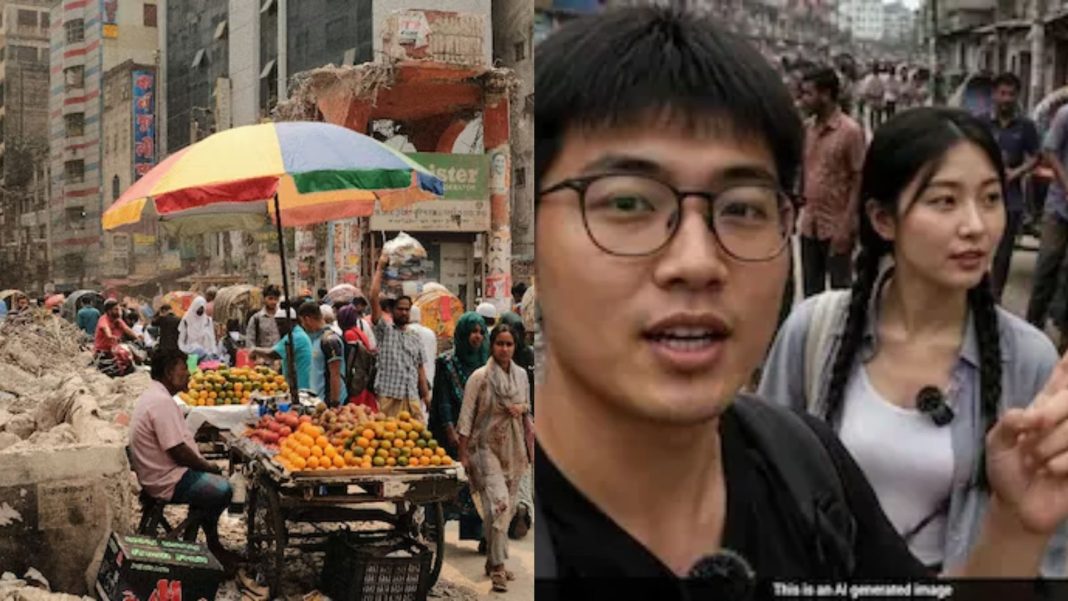

Chinese Vloggers Misrepresent Dhaka Slums: A major international digital controversy has erupted after Chinese content creators were exposed for secretly filming in the impoverished neighborhoods of Dhaka, Bangladesh, and falsely presenting the footage to their foreign audiences as New Delhi, India.
According to media reports, these livestreaming operations have raised serious concerns over digital misinformation, coordinated online propaganda aimed at defaming India, and severe privacy violations affecting vulnerable Bangladeshi families.
The systematic deception came to light following extensive investigative reporting by local Bangladeshi newspapers, revealing that groups of foreign nationals have spent months broadcasting daily from low-income urban settlements while constructing deceptive narratives for millions of viewers across overseas video networks.
Modus Operandi of the Deceptive Livestreaming Operations
Chinese Vloggers Misrepresent Dhaka Slums: According to media reports, the investigative probe identified multiple groups of Chinese vloggers operating continuously in Dhaka’s Uttara Sector 12 and Tekpara localities.
These content creators allegedly record narrow alleyways, dilapidated housing structures, makeshift tea stalls, and everyday scenes of economic hardship from early morning until late at night.
The creators broadcast these livestreams across major Chinese social media networks, including Douyin (mainland China’s counterpart to TikTok), WeChat, Bilibili, and Youku.
According to media reports, the uploaded content regularly utilizes sensationalist titles with disparaging language like “slum,” “poor,” and “dirty,” while explicitly identifying the locations as the capital of India.
To sustain their long-duration shoots, the vloggers reportedly employ local Bangladeshi guides, paying them daily stipends of 700 to 800 Taka to help navigate dense residential lanes and interact with local residents who are kept completely in the dark regarding how their likenesses and surroundings are portrayed overseas.
Severe Privacy Violations and Rising Local Anger in Dhaka
Chinese Vloggers Misrepresent Dhaka Slums: The non-stop video recording has triggered intense outrage and frustration among residents in the affected Dhaka neighborhoods, who report extreme discomfort due to blatant intrusions into their personal lives, private spaces, and domestic routines.
According to media reports, local families revealed that foreign creators frequently walk uninvited into private courtyards, residential kitchens, and personal washing quarters with active cameras.
Because of severe language barriers, local residents have struggled to understand the live commentary or voice effective objections when creators record women and children inside their homes.
Local police representatives from the Uttara West Police Station acknowledged receiving formal complaints from community members regarding the unauthorized, round-the-clock streaming.
According to media reports, law enforcement authorities have briefed senior administrative agencies to examine the visa categories, filming permits, and digital activity of the foreign nationals involved in these residential zones.
Echoes of Previous Exploitative Content Strategies Abroad
Chinese Vloggers Misrepresent Dhaka Slums: Geopolitical analysts and media commentators note that this deceptive campaign in Bangladesh follows a documented history of predatory social media practices by foreign creators operating in developing countries.
According to media reports, similar exploitative content networks previously surfaced across several African countries including Tanzania, Zambia, Guinea, and Kenya.
In those instances, creators produced degrading videos targeting local children and low-income communities to drive engagement, generate ad revenue, and sell product placements to audiences back home.
That earlier wave of sensationalism provoked widespread international criticism, eventually forcing major social platforms to restrict account activity and ban specific search keywords associated with overseas poverty streams.
The current situation in Dhaka has escalated from a localized privacy issue into a broader digital defense concern, highlighting how geopolitical rivals can weaponize social media algorithms and manufactured urban poverty to influence public perception, distort global economic standings, and project negative portrayals of neighboring regional powers.