


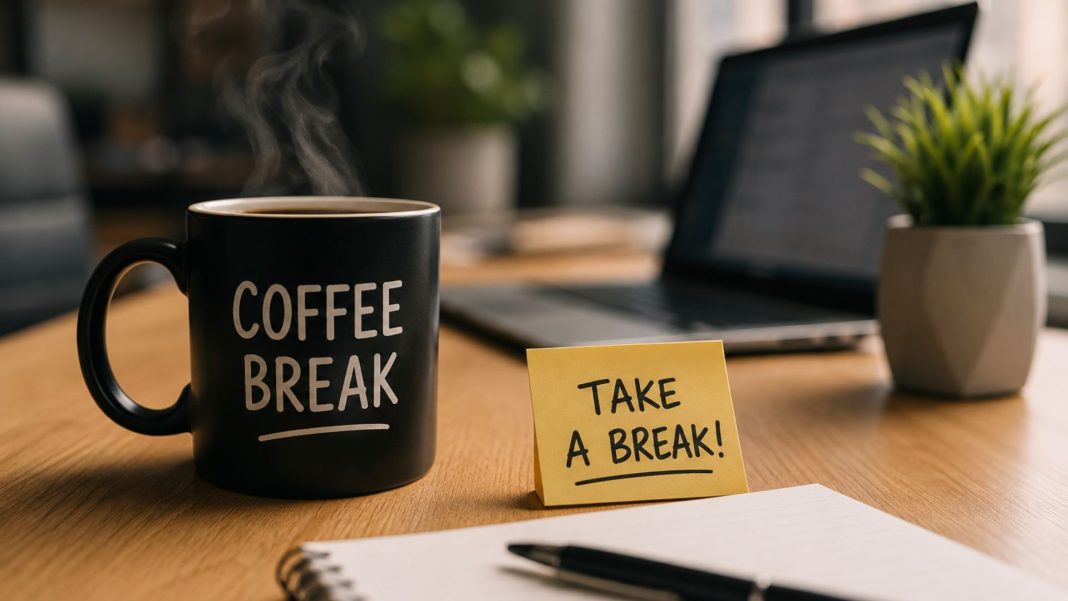

Five-Minute Coffee Break Productivity: It is 3:00 PM on a demanding workday. You have been staring at the exact same complex spreadsheet for over an hour, emails continue to pile up, your neck feels tight, and your brain is operating at half speed.
Like millions of office workers worldwide, you automatically get up and walk toward the office coffee machine.
While that warm cup of coffee feels like an instant lifeline, health and workplace experts suggest that the sudden burst of energy might not come entirely from the espresso shot.
Instead, the real driver of renewed focus is the simple act of stepping away from your workstation.
Your Brain Needs a Mental Reset, Not Just More Caffeine
Five-Minute Coffee Break Productivity: A typical corporate schedule demands hours of uninterrupted screen exposure, constant task switching, and urgent deadlines. Over time, this intense focus drains cognitive energy, leading to a noticeable drop in efficiency.
Mugdha Pradhan, functional medicine practitioner, breathwork expert, and Founder & CEO of iThrive, emphasizes that people often confuse mental exhaustion with a caffeine deficiency.
According to media reports citing Pradhan, taking a brief pause away from digital screens helps interrupt the continuous cycle of cognitive overload.
According to Pradhan, simply slowing down, stepping outside for natural sunlight, chatting with a peer, or engaging in mindful breathing gives the human body a vital pause.
Industry insights highlight that effective micro-breaks do not require complex routines. Simple actions such as refilling a water bottle, climbing a flight of stairs, looking out a window, or having a non-work conversation can effectively reset your focus.
The primary objective is to mentally and physically distance yourself from the task, rather than taking a “break” while scrolling through social media or checking emails on your phone.
What Caffeine Actually Does to the Body
Five-Minute Coffee Break Productivity: Caffeine is renowned for boosting short-term alertness. It works primarily by temporarily blocking adenosine the neurotransmitter responsible for promoting sleepiness and muscle relaxation.
However, experts warn that caffeine is a temporary stimulant rather than a replacement for actual physical recovery.
According to media reports quoting Pradhan, relying on coffee to push through severe fatigue can create an unhealthy dependency cycle.
When a person is genuinely exhausted, the body requires sleep, proper nutrition, movement, or hydration not another stimulant.
Consuming heavy amounts of caffeine late in the afternoon can disrupt nighttime sleep patterns. This often leads to waking up unrefreshed the following day, prompting an immediate dependence on early-morning coffee.
Over time, this creates a chronic cycle of fatigue and over-caffeination.
Redefining the Midday Workplace Break
How do coffee breaks impact productivity? Holistic health expert and corporate coach Dr. Mickey Mehta views midday fatigue as a silent energy thief that degrades posture, heaviness, and workplace output.
According to news sources covering Dr. Mehta’s insights, a purposeful break allows professionals to step back from “constant doing” and reconnect with their physical breath and situational awareness.
Experts point out that employees do not necessarily need to drink coffee to reap the rewards of a rest period.
According to Dr. Mehta, shifting the default habit toward a glass of room-temperature water, lemon water, herbal tea, or a light nutritional snack provides a refreshing physical reset without the downside of a late-afternoon caffeine crash.
Physical movement such as spinal stretches or a brief walk around the office building further combats the hazards of prolonged sitting.
| Break Choice | Physical & Mental Effect | Best Used For |
|---|---|---|
| Caffeine Top-Up | Blocks sleepiness chemicals (adenosine); temporary spike in alertness. | Early morning energy or short-term alertness. |
| Physical Movement | Relieves spinal tension, boosts circulation, and combats prolonged sitting risks. | Midday physical stiffness and fatigue. |
| Hydration / Herbal Tea | Rehydrates tissue and refreshes cognitive focus without sleep disruption. | Afternoon fatigue without caffeine crash risk. |
| Social / Mental Pause | Clears cognitive overload and restores creative problem-solving capacity. | Mental burnout and spreadsheet strain. |
How Modern Workspaces Are Adapting
Workplace design also plays a major role in whether staff members feel comfortable taking restorative breaks.
Rajat Kapur, Regional Managing Director at The Executive Centre, notes that modern corporate culture often suffers from an “endurance economy,” where workers feel pressured to operate at full capacity without resting.
According to media reports featuring Kapur, addressing workplace burnout requires companies to build functional communal spaces. Rather than forcing every interaction to happen at an employee’s desk or in formal boardrooms, modern offices are increasingly introducing informal lounges and dedicated coffee hubs.
These collaborative spaces allow workers to step away from task-related pressure, exchange creative concepts, and build organic workplace relationships.
Finding the Right Break Rhythm
According to workplace wellness researchers, there is no single break schedule that works identically for everyone.
However, studies suggest that standing up every couple of hours, keeping at least one daily break completely caffeine-free, and stepping completely away from your desk offer the most consistent productivity gains.
Ultimately, while that warm cup of coffee can remain a comforting part of the workday, the true key to sustained mental clarity is giving yourself unconditional permission to step away from the screen.
Also Read: Adult Friendships: 7 Realistic, Low-Effort Ways to Keep Adult Friendships Thriving