


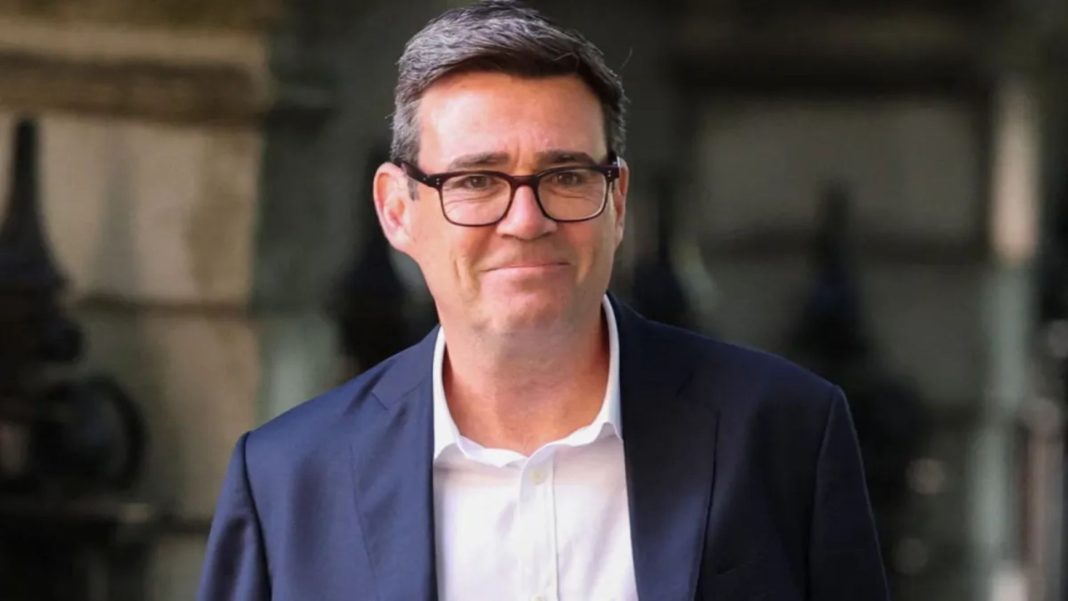

‘King of the North’ Takes the Crown: A historic transition of power has begun in British politics. On Friday, Andy Burnham was officially declared the new leader of the governing Labour Party, positioning him to become the United Kingdom’s next Prime Minister on Monday.
The official announcement was made at a special party conference in London by Shabana Mahmood, Chair of Labour’s National Executive Committee (NEC). The move follows a rapid shift in the party’s leadership after Keir Starmer announced he would step down from office.
With Starmer expected to formally hand his resignation to King Charles III on Monday morning, Burnham is poised to immediately receive the royal invitation to form a new government and take charge at 10 Downing Street.
The Landslide: A One-Man Leadership Race
‘King of the North’ Takes the Crown: While leadership transitions in Westminster are often defined by bitter, weeks-long internal battles, Burnham’s ascent to the top job was an absolute coronation.
The former Manchester Mayor secured overwhelming support from his parliamentary colleagues, completely shutting out any potential rivals.
Dominant MP Backing: Burnham secured nominations from 379 out of 403 Labour Members of Parliament in the House of Commons.
No Room for Competitors: Under party rules, any challenger needed at least 81 nominations to enter the ballot. Because Burnham locked up nearly the entire parliamentary party, it became mathematically impossible for any rival candidate to challenge him.
Broad Coalition Support: Along with MPs, Burnham secured crucial endorsements from key trade unions and local Labour Party branches, presenting a united front as he prepares to lead the country.
“Only one Member of Parliament was nominated,” Shabana Mahmood told the conference. “This was not a close-run thing.”
‘We Will Give Them Hope Back’: Burnham’s Vision for Britain
‘King of the North’ Takes the Crown: In his first address as Labour leader, an emotional Burnham thanked his family and party members, promising a radical departure from the centralized, Westminster-focused politics of the past.
“We are going to give them hope back,” Burnham told the audience. “This is a proud moment you have given me and my family today, and an emotional one, but it is one for which I am ready.”
The new leader hinted at a sweeping legislative agenda designed to “fix the big things that politics has neglected.” Among his chief priorities, Burnham pledged to focus on:
Economic Renewal: Moving away from the centralized economic models of the last 40 years to spread wealth and growth “in every postcode.”
Reclaiming Public Control: Restoring public or mutual ownership over key sectors, including struggling utility systems like water companies.
Decentralizing Power: Bringing regional authority back to local communities. True to his roots, Burnham has even proposed establishing a “No. 10 North” office in Manchester to shift the government’s gravity away from London.
The Legacy of the “King of the North”
At 56, Burnham returns to frontline national politics with a unique reputation. First elected as an MP for Leigh in 2001, he served in the cabinets of Tony Blair and Gordon Brown as Culture Secretary and Health Secretary.
However, it was his decade-long tenure as the Metro Mayor of Greater Manchester that redefined his political career. During the COVID-19 pandemic, Burnham famously went head-to-head with Boris Johnson’s Conservative government, fighting for localized financial support for northern workers. His fierce defense of his region earned him the nickname “King of the North.”
After Starmer’s standing eroded due to local election defeats and policy missteps, Burnham returned to Parliament by winning a decisive by-election in Makerfield, paving his way straight to the party leadership.
A Heavy In-Tray Awaits the New Prime Minister
While Burnham’s coronation brings a fresh lease of energy and a more relaxed, communicative leadership style to the Labour Party, his honeymoon period will be incredibly short. When he walks through the door of No. 10 on Monday, he faces a daunting set of national crises:
The Cost-of-Living Squeeze: Inflation and stagnant wages continue to pressure British households. Burnham’s allies expect him to introduce immediate relief measures, potentially including a freeze on private sector rents.
Overstretched Public Services: The National Health Service (NHS) is facing massive backlogs, and the social care sector remains in a state of crisis, a challenge Burnham has promised to make an immediate priority.
Foreign Policy Voids: Unlike his predecessors, Burnham has relatively limited experience on the global stage. He will have to quickly navigate complex international relationships, including the ongoing war in Ukraine and diplomatic ties with the US administration.
What Happens on Monday?
The official timeline for the handover of power is set for Monday:
The Resignation: Keir Starmer will travel to Buckingham Palace to formally tender his resignation to King Charles III.
The Appointment: King Charles will then invite Andy Burnham to form a government, officially appointing him as the UK’s 59th Prime Minister.
The Speech: Burnham will travel directly to Downing Street to deliver his first prime ministerial address to the nation.
The Cabinet: Later in the afternoon, the new Prime Minister will unveil his cabinet appointments, which are expected to balance representation from all wings of the Labour Party.
Andy Burnham’s leadership campaign launch provides a deeper look into the events that led to his bid for the prime minister’s office and his reaction immediately following Starmer’s resignation.