


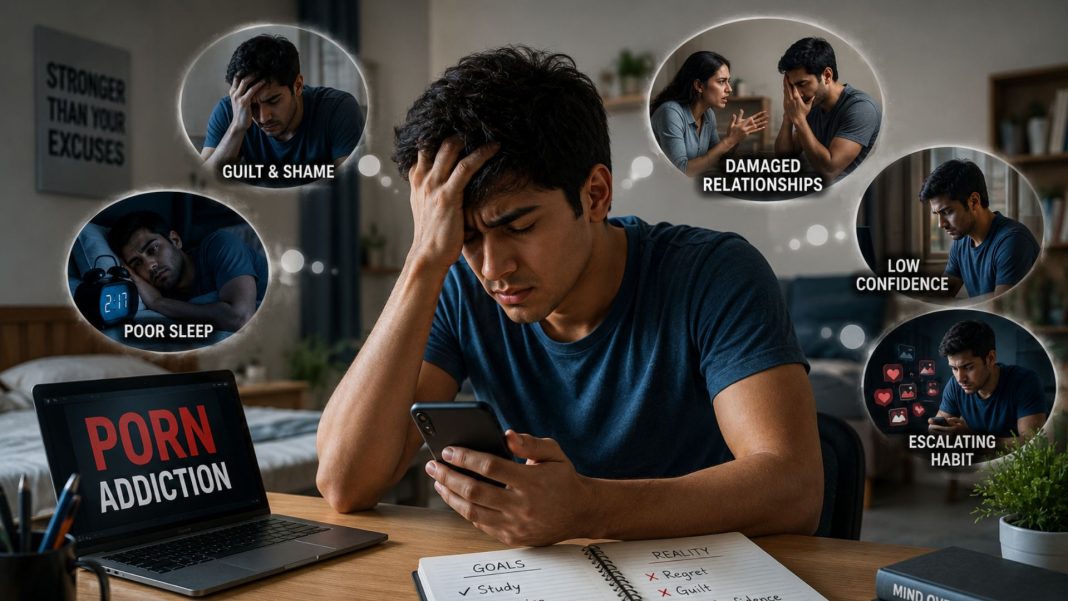

Pornography Addiction Negative Impact: In today’s digital age, pornography is more accessible than ever before. With just a few clicks, anyone with a smartphone can access thousands of videos.
While it is often dismissed as harmless entertainment, recent data shows a shifting reality, especially among young adults. Research indicates that up to 65% of young adult men and 18% of young women report watching pornography at least once a week.
For many, this frequent consumption crosses the line from a casual habit into a compulsive behavior, eventually turning into an addiction.
Understanding the pornography addiction negative impact on an individual’s mental health, physical well-being, and personal relationships is the first step toward reclaiming control.
The Triple Threat: Mental, Physical, and Emotional Consequences
Pornography Addiction Negative Impact: When pornography use becomes an addiction, the individual spends increasing amounts of time seeking out content. Over time, users often progress toward more extreme material to achieve the same level of stimulation. This compulsive cycle leads to severe consequences across three major areas of life:
The Mental and Psychological Burden
Pornography Addiction Negative Impact: An addiction to pornography heavily alters brain chemistry, specifically affecting how the brain processes dopamine (the reward chemical). This distortion leads to significant psychological distress:
The Guilt Cycle: Users frequently experience an intense rush of excitement before and during viewing, which is immediately followed by deep feelings of shame, guilt, remorse, or depression.
Cognitive Distraction: A person struggling with addiction spends considerable mental energy thinking about porn even when they are not using it, constantly planning their next private session.
Escapism: Pornography is often used as an unhealthy coping mechanism to escape real-life emotions like anxiety, loneliness, anger, or boredom.
The Physical and Biological Impact
While primarily a behavioral issue, pornography addiction can manifest in distinct physical and biological ways:
Desensitization: The human brain gets used to high-strength digital stimulation. As a result, individuals often find themselves unable to be sexual or intimate with a real, physical partner, leading to induced sexual dysfunction.
Sleep and Fatigue: Compulsive viewing often happens late at night, disrupting natural sleep cycles, causing chronic fatigue, and affecting overall physical energy levels.
The Damage to Intimate Relationships
One of the most destructive aspects of this condition is how it erodes human connection:
Emotional Distance: It creates a silent emotional wall between partners. The user becomes emotionally detached, leaving their partner feeling neglected, unattractive, or rejected.
Erosion of Trust: Because of the shame associated with the habit, users go out of their way to hide their behavior. This involves deleting browsing histories, lying about time spent online, or engaging in infidelity, which destroys the foundation of trust in a relationship.
Red Flags: How to Recognize Problematic Usage
Many individuals wonder where the line is between casual viewing and a serious issue. You can determine if pornography use has become harmful by identifying these key behavioral signs:
Loss of Control: You make frequent, unsuccessful efforts to limit your usage or stop entirely, but you find yourself constantly falling back into the same loop.
Secretive Behavior: You go out of your way to hide your devices from others, delete your internet browsing history immediately after viewing, or lie to your loved ones about your online habits.
Neglecting Responsibilities: The time you spend watching pornography increases to the point where it takes precedence over your academics, job performance, personal hobbies, or social commitments.
Engaging in Risky Behavior: You view content in high-risk or inappropriate situations, such as during work hours or on corporate devices, actively risking your employment, grades, or reputation.
Practical Strategies: How to Break the Cycle
Overcoming a compulsive habit requires shifting your daily environment and building healthier routines. Here are practical, actionable steps to regain control:
Alter Your Environment and Routines
Identify your specific triggers. If being alone in your bedroom with your laptop late at night leads to compulsive viewing, change that environment. Leave your devices outside the bedroom, install web blockers, and avoid high-risk situations where temptation is highest.
Spend Less Time Alone
Isolation feeds addiction. Review the status of your current friendships and relationships. Focus your energy on building meaningful, satisfying, and real-world connections. Engaging in group activities or spending time in public spaces naturally reduces the opportunity for compulsive behavior.
Develop Healthy Coping Mechanisms
Since pornography is often used to numb negative emotions like anxiety or depression, it is essential to find positive alternatives. Replace the urge with activities that naturally refresh your mind, such as regular physical exercise, outdoor sports, picking up a hands-on hobby, or practicing mindfulness and meditation.
Analyze the Consequences
Make a clear, honest list of the positive and negative consequences of using pornography versus choosing not to use it. Visually seeing how the habit negatively impacts your finances, career, and relationships can serve as a powerful mental anchor when you experience cravings.
Also Read: Understanding PCOD & PMOS (Formerly PCOS): How to Conceive and Manage Your Pregnancy Journey