


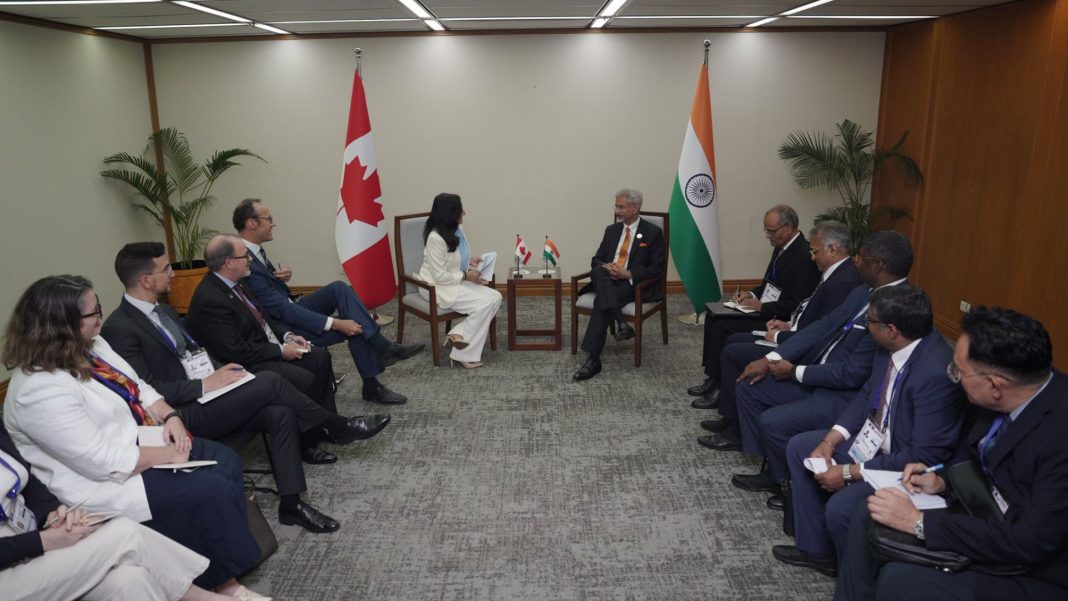

Quad Summit 2026: Foreign Ministers from the Quadrilateral Security Dialogue, comprising India, the United States, Japan, and Australia, met in Manila on Tuesday to reaffirm their shared vision for a “free and open Indo-Pacific.”
The high-level talks coincided with the ASEAN Foreign Ministers’ Meeting, coming just a day after a violent maritime clash between Chinese and Philippine forces in the disputed South China Sea.
Key Highlights: What Transpired in Manila
A United Front: Quad foreign ministers reiterated their commitment to a rules-based international order, national sovereignty, and territorial integrity.
Support for ASEAN: The grouping explicitly recognized ASEAN centrality, emphasizing that regional stability depends on supporting Southeast Asian priorities.
Implicit Message to Beijing: While the joint statements avoided naming China directly, the emphasis on maritime law and sovereignty delivered a clear message against unilateral aggression.
Follow-up on New Delhi Agenda: Discussions built upon agreements reached during the previous Quad Foreign Ministers’ Meeting held in New Delhi.
Backdrop: Dramatic Skirmish at Second Thomas Shoal
Quad Summit 2026: The Quad meeting took place under the shadow of an escalating maritime confrontation in the South China Sea.
The Incident
On Monday, a sharp altercation broke out near the disputed Second Thomas Shoal between Chinese Coast Guard personnel and Philippine sailors:
Philippine Claims: Officials in Manila reported that Chinese personnel used paddles and wooden clubs during the clash, leaving a Philippine sailor injured after being struck on the head.
Beijing’s Counterclaim: China rejected the allegations, asserting that Philippine personnel initiated the confrontation by approaching Chinese vessels in small rubber boats. Beijing described Manila’s account as a distortion of facts.
Diplomatic Fallout
The confrontation led to both nations summoning each other’s ambassadors. The incident drew sharp criticism from international allies, with Washington and Canberra urging Beijing to abide by international law and cease coercive behavior.
Diplomatic Statements: Leaders Weigh In
India: Focus on Regional Stability
Indian External Affairs Minister S. Jaishankar highlighted the importance of continuous dialogue among Quad partners.
“Reviewed the Indo-Pacific landscape and discussed recent developments. Took forward outcomes from our recent meeting in New Delhi. Committed to a free and open Indo-Pacific while recognizing ASEAN centrality.”
— S. Jaishankar, External Affairs Minister of India (via X)
Glad to participate in the Quad Foreign Ministers Meeting in Manila.
— Dr. S. Jaishankar (@DrSJaishankar) July 22, 2026
Reviewed the Indo-Pacific landscape and discussed recent developments. Followed up on the outcomes of the recent New Delhi meeting.
Committed to a free and open Indo-Pacific with a recognition of ASEAN… pic.twitter.com/p7EqFHu4c6
United States: Quad Remains a Top Priority
Quad Summit 2026: US Secretary of State Marco Rubio reaffirmed Washington’s long-term commitment to the grouping and regional security.
“India, the United States, Japan, and Australia share a common vision for an Indo-Pacific anchored in the rule of law, sovereignty, and territorial integrity. The Quad remains a top priority for Washington, and all four partners will convene again later this year.”
— Marco Rubio, US Secretary of State
Was pleased to reconvene the Quad at the @ASEAN Foreign Ministers Meeting to emphasize our message: strong cooperation is vital to supporting ASEAN’s own priority and centrality in the region.
— Secretary Marco Rubio (@SecRubio) July 22, 2026
The United States, India, Australia, and Japan share a vision of a free and open… pic.twitter.com/hDgu6un1Yd
Analysis & Strategic Outlook
The timing of the Manila meeting, held alongside the ASEAN summit, amplifies the Quad’s collective message in the wake of high-tension maritime clashes involving a key US treaty ally, the Philippines.
By employing law-based terminology emphasizing sovereignty and the international rule of law, the Quad sends a firm, diplomatic counter-signal against Chinese maritime assertiveness without triggering immediate military escalation.
As tensions persist in the South China Sea, the Quad’s combined focus on diplomatic engagement, maritime security cooperation, and strong alignment with ASEAN partners will remain essential to maintaining stability across the Indo-Pacific region.
Also Read : Global Navies Anchor in Kochi: India Hosts Historic 26-Nations Maritime Security Drill