


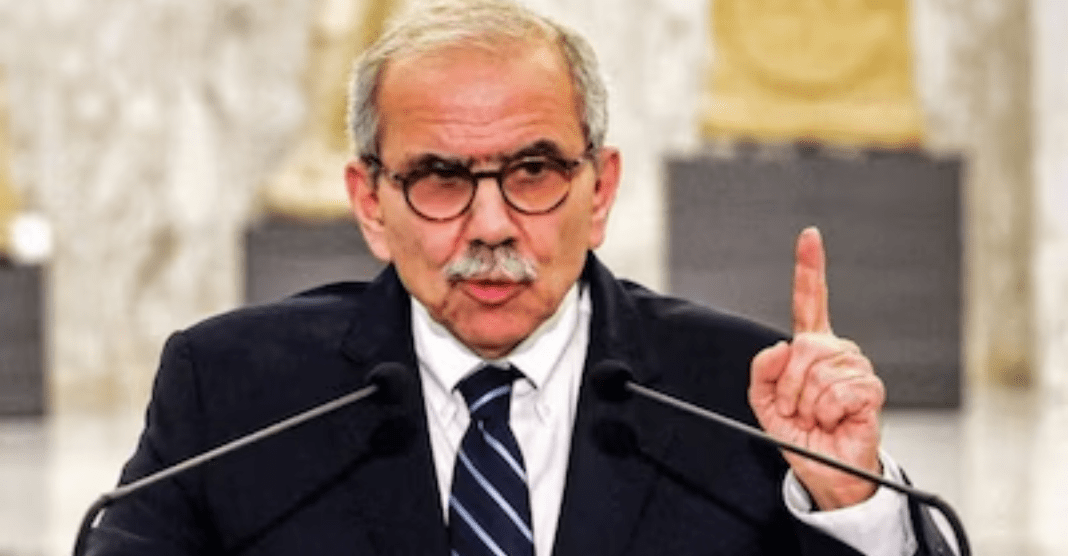

Diplomacy Amid Bombardment: The shifting dynamics of West Asian geopolitics have now placed Washington at the center of a high-stakes diplomatic push.
Lebanese Prime Minister Nawaf Salam is reportedly preparing for an urgent visit to the United States following an unexpected move by Israel, which has proposed direct negotiations with the Lebanese government.
This marks a significant departure from decades of indirect engagement between the two sides.
However, the timing underscores the gravity of the situation, coming just as intense Israeli strikes in Lebanon have reportedly caused heavy casualties.
Salam’s visit is widely seen as an attempt to open a formal diplomatic channel amid escalating violence.
Negotiations “Under Fire”: A Complex Reality
Diplomacy Amid Bombardment: Israeli Prime Minister Benjamin Netanyahu has made it clear that military operations will not pause for diplomacy.
He has stated that there is “no ceasefire in Lebanon” and that any negotiations will proceed even as strikes continue.
Reports suggest that Israel has also requested a short extension from Washington to complete specific military objectives targeting Hezbollah infrastructure before fully engaging in talks.
This dual-track approach, warfare alongside diplomacy—adds a layer of complexity that could hinder meaningful progress.
Lebanon’s Position: Ceasefire First
Diplomacy Amid Bombardment: In contrast, Lebanon’s leadership is holding firm on its demand for an immediate cessation of hostilities.
President Joseph Aoun has emphasized that a ceasefire is the only viable path to prevent further internal instability.
This fundamental disagreement, Israel’s willingness to negotiate amid ongoing operations versus Lebanon’s insistence on peace first, represents the central obstacle in the upcoming discussions.
Bridging this gap will be a major challenge for mediators.
The US as a Key Mediator
The United States, led by President Donald Trump and Vice President JD Vance, is positioning itself as the primary broker in this crisis.
US Secretary of State Marco Rubio is expected to play a crucial role in facilitating dialogue between the two sides.
However, with violence continuing on the ground, Washington faces mounting pressure to deliver results quickly while maintaining credibility with both parties.
Tensions Over the US-Iran Ceasefire
Diplomacy Amid Bombardment: Adding to the complexity is a broader regional dispute over a recently announced ceasefire between the US and Iran, reportedly brokered with Pakistan’s involvement.
Pakistani Prime Minister Shehbaz Sharif and Iranian officials have claimed that the truce applies across the region, including Lebanon.
However, both the US and Israel have rejected this interpretation, asserting that the agreement is strictly bilateral and does not extend protection to Hezbollah.
This disagreement has further complicated the diplomatic landscape.
Deadline Pressure and Global Attention
With the temporary ceasefire set to expire on April 21, time is running out to achieve any meaningful breakthrough.
The international community is closely watching the developments in Washington, where these high-level talks could determine the next phase of the conflict.
The key question remains whether the “Washington track” can isolate the Lebanon crisis from the broader Iran-Israel tensions, or whether continued military escalation will derail diplomacy before it gains traction.
A Narrow Path to Peace
The conflict between Israel and Lebanon has evolved into a broader regional flashpoint, with global implications.
Diplomacy Amid Bombardment: Nawaf Salam’s visit to the United States offers a window of opportunity for dialogue, but the conditions on the ground remain deeply unfavorable.
As bombs continue to fall and political divisions persist, the path to peace appears uncertain.
The coming days will reveal whether this diplomatic effort can produce a breakthrough or become yet another missed opportunity in a long history of conflict.