
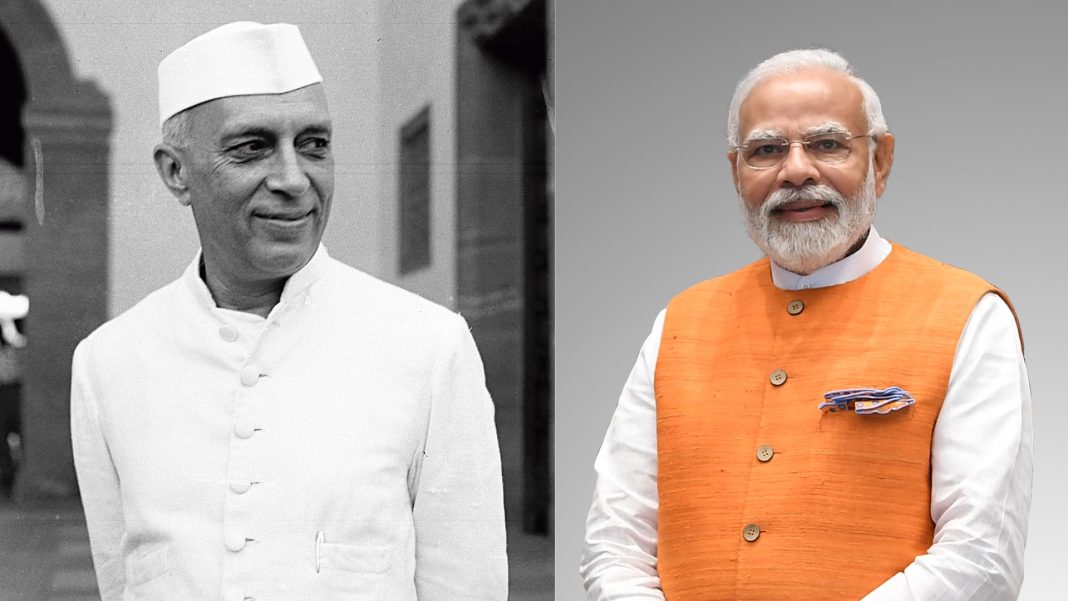

PM Modi Breaks Nehru’s Record: Indian politics has entered a historic chapter. Prime Minister Narendra Modi has officially created history by becoming India’s longest-serving continuously elected Prime Minister.
Crossing a mega milestone of 4,399 consecutive days in office, PM Modi breaks the Nehru record of 4,398 uninterrupted days.
To mark this personal milestone and celebrate 12 years of the Bharatiya Janata Party (BJP)-led National Democratic Alliance (NDA) government, a grand celebratory event is organized at Bharat Mandapam in New Delhi.
The event will bring together 72 top political figures, including NDA Chief Ministers, Deputy Chief Ministers, and Union Ministers to felicitate the Prime Minister.
What makes this journey unique is that it was achieved without a crown of legacy or family support it was built purely on the trust of the people.
Decoding the Numbers: How PM Modi Breaks Nehru’s Record
PM Modi Breaks Nehru’s Record: To understand this monumental political milestone, it is important to decode the historical numbers:
Jawaharlal Nehru’s Tenure: While India’s first Prime Minister, Jawaharlal Nehru, accumulated a total of 16 years in office starting from Independence in 1947, his first five years were spent heading an interim, pre-election government.
His unbroken tenure as a directly elected democratic leader began only after the first general elections concluded on May 13, 1952, and lasted until May 27, 1964 (totaling 4,398 uninterrupted days).
Indira Gandhi’s Tenure: Former PM Indira Gandhi served for a cumulative total of over 14 years, but her tenure was fractured and interrupted by the 1977 general elections.
PM Modi’s Unique Milestone: PM Modi’s unbroken 12-year stretch spanning historic landslide majorities in 2014 and 2019, followed by the seamless continuation of governance under the NDA coalition in 2024 makes his continuous democratic run entirely unique in the modern era.
Winning the People’s Trust: The Three Pillars of Governance
PM Modi Breaks Nehru’s Record: How did PM Modi win the absolute trust of 1.4 billion citizens for 12 straight years? According to BJP President Nitin Nabin, this era has been defined by three core pillars: Vishwas (Trust), Vikas (Development), and Jan Kalyan (Public Welfare).
By advancing the philosophy of “Sabka Saath, Sabka Vikas, Sabka Vishwas,” the government has fostered a new national mindset rooted in collective strength.
Unlike the past, where governance was often slow, this 12-year era will be recorded in history for its incredible “speed and scale,” driving economic empowerment and raising India’s honor on the global stage.
Economic Growth and Infrastructure Boom (Vikas)
Over the past 12 years, the Indian economy and its physical landscape have undergone a massive structural shift:
7% Growth Rate: Under PM Modi’s leadership, India’s domestic production rate has maintained a steady and impressive average growth of 7 percent over the last 12 years.
Highway Network Expansion: The national highway network has been aggressively expanded to cover more than 1.5 lakh kilometers, smoothly connecting remote corners of the nation.
Aviation Boom: The number of operational airports in India has more than doubled, growing rapidly from 74 airports in 2014 to 160.
Digital Revolution and Public Welfare (Jan Kalyan)
One of the greatest achievements of the Modi government is changing how welfare schemes reach the common man. The government successfully eradicated extreme poverty for over 200 million citizens through:
The JAM Trinity: By linking Jan Dhan bank accounts, digital verification infrastructure, and Mobile numbers, the government eliminated corruption and middle-men. Welfare money now goes directly into the bank accounts of the poor.
Digital Public Infrastructure: The global expansion of the Unified Payments Interface (UPI) has turned India into a global leader in digital cashless payments, empowering everyone from small street vendors to large businesses.
Cultural Pride and Decolonisation
The last decade was not just about economic changes; it also brought a major shift toward cultural nationalism and identity. The government initiated a broader process of decolonisation by moving away from colonial-era identities. This includes:
Symbolic Renaming: Changing the names of historic public spaces and institutions to honor indigenous roots and national icons like Sardar Vallabhbhai Patel.
Vocal for Local: Encouraging citizens to take deep pride in local heritage, local capabilities, and indigenous Indian industries, boosting self-reliance (Atmanirbhar Bharat).
Global Recognition: The World Applauds India’s Leader
This 12-year milestone has reverberated well beyond India’s borders, drawing high praise from international heads of state:
Sri Lankan President Anura Kumara Dissanayake termed this historic achievement a powerful “testament to democratic trust.”
Papua New Guinea Prime Minister James Marape shared a personal video message calling PM Modi a global “role model of leadership,” specifically praising his success in uplifting millions out of poverty.
“Nation First” and the Journey to Viksit Bharat
Responding to the nationwide celebrations and international wishes, Prime Minister Modi dedicated the 12-year milestone entirely to the citizens of India.
He affirmed that with the blessings of 1.4 billion fellow citizens and the spirit of “nation first,” the government will continue to spare no effort in empowering the youth, women, farmers, and weaker sections of society.
As the BJP launches a nationwide outreach campaign to showcase these major achievements, this historical milestone sets a definitive, golden course toward building a completely Viksit Bharat (Developed India).
Also Read: PM Modi Completes 12 Years in Office: A Look at Major Policy Shifts and the ‘Viksit Bharat’ Vision