


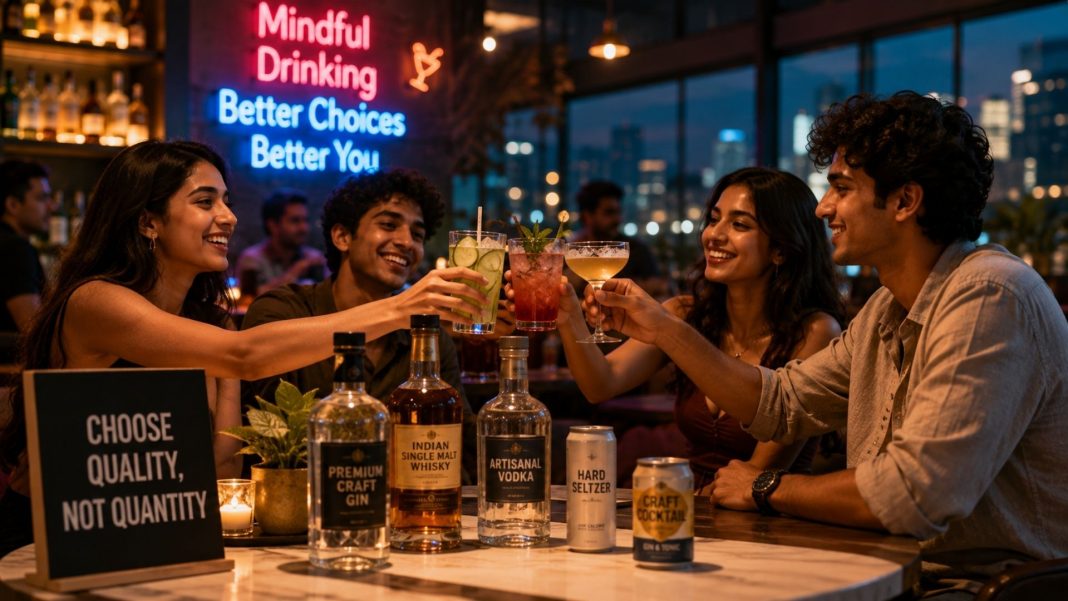

The Sober-Curious Paradox: The modern lifestyle of Generation Z (individuals born roughly between 1997 and 2012) represents a distinct departure from that of previous generations.
Young adults today navigate social and professional spheres with an acute focus on holistic health, physical fitness, budget control, and personal wellness. This shifting mindset is fundamentally transforming traditional social habits and recreational choices.
According to media reports, the longstanding link between youth culture and frequent drinking is undergoing a major evolution.
Younger demographics in India are increasingly stepping back from regular alcohol consumption a trend often linked to the global “sober-curious” movement.
Yet, despite lower consumption frequency, India’s alcoholic beverage (alcobev) sector continues to demonstrate solid financial health. This paradox points to a fundamental structural evolution within the market.
Core Factors Driving Alcohol Moderation Among Gen Z
The Sober-Curious Paradox: The choice to reduce alcohol intake stems from a combination of health awareness, changing social preferences, and economic realities. According to media reports, several primary drivers explain why Gen Z is consuming less alcohol:
Health and Fitness Focus: Increased awareness around physical fitness, clean nutrition, and mental well-being leads young adults to view frequent alcohol consumption as a health risk.
Emergence of Mindful Habits: Participation in “dry months” and mixing non-alcoholic beverages into social outings reflect a deliberate push toward moderation and conscious choices.
Economic Sensibility: In an era of rising inflation and shifting economic pressures, entry-level professionals exercise greater financial prudence, evaluating discretionary spending carefully.
Quality Over Quantity: The Shift Toward Premiumization
The Sober-Curious Paradox: A drop in overall drinking frequency has not disrupted market momentum. Instead, it has accelerated a powerful industry movement toward “premiumization”.
According to media reports, when Gen Z individuals do choose to consume alcoholic beverages, their priorities shift away from mass-market options toward superior quality, craft authenticity, unique flavor profiles, and brand heritage.
Rather than consuming larger volumes of entry-level options, younger adults prefer refined, experience-led drinks:
Craft & Specialty Spirits: Growing demand for artisanal gins, craft vodkas, and regional single malts shows a clear preference for distinct taste profiles over high alcohol volume.
Flavor-Driven & Low-Calorie Formats: Ready-to-Drink (RTD) premixes, hard seltzers, and flavored spirits appeal to wellness-conscious consumers seeking convenience without heavy caloric intake.
Repertoire & Occasion-Based Drinking: Younger consumers exhibit lower brand attachment, preferring to experiment across categories from dynamic cocktail menus to low-alcohol alternatives depending on the specific social setting.
Industry Response: How Liquor Majors Are Capitalizing on the Trend
The Sober-Curious Paradox: The movement toward mindful drinking has prompted major alcoholic beverage manufacturers to recalibrate their commercial strategies.
Prominent industry leaders in India such as Radico Khaitan, United Spirits Limited (Diageo India), and United Breweries are steering portfolio growth away from volume dependency toward high-margin, premium product segments.
According to media reports, corporate strategies are adapting to these evolving habits through clear operational shifts:
Expanding Premium & Luxury Offerings: Companies are seeing strong financial performance driven by high-end lines, premium whiskies, and single malts, offsetting slower volume growth in economy segments.
Diversifying Product Ecosystems: Alcobev majors are continuously introducing RTD cocktails, flavored variants, and zero-proof alternatives to directly engage sober-curious and health-focused consumers.
Experience-Centric Marketing: Modern brand strategies have shifted toward digital discovery, mixology culture, and lifestyle-oriented marketing campaigns designed to connect with modern young adults.
By adapting to Gen Z’s preference for quality over volume, India’s alcobev industry is successfully turning moderation into a high-value growth opportunity.
Also Read: India’s Front-of-Pack Food Warning Labels: Why Nestle Wants a Seat at the Regulatory Table