


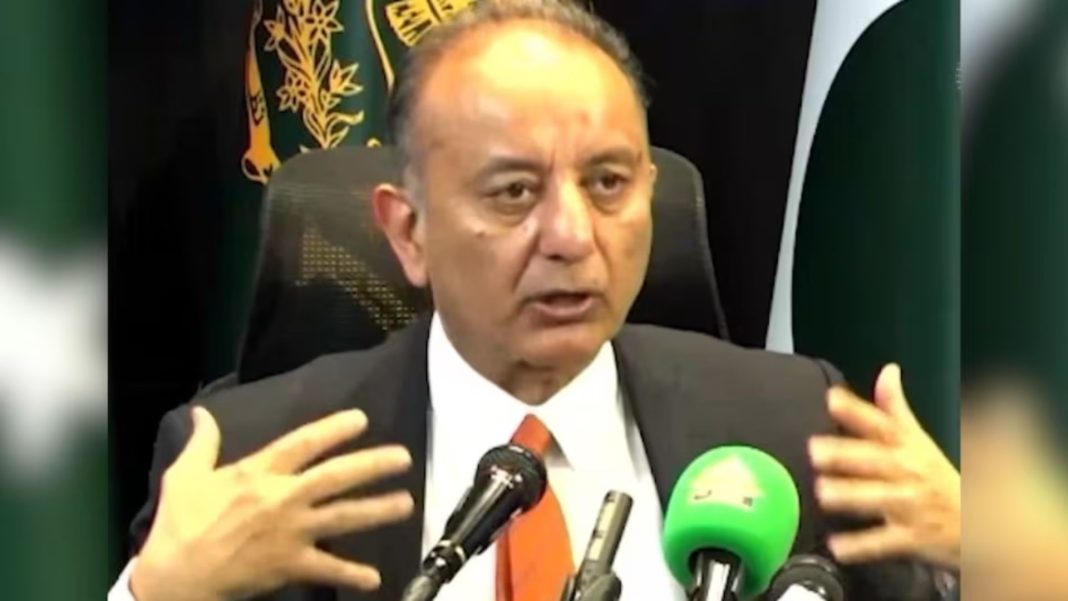

Indus Water Treaty: The long-standing water diplomacy between India and Pakistan has taken a volatile and aggressive turn. In a fiery press conference, Pakistani Minister Musadik Malik issued a direct military threat to New Delhi, declaring that anyone who attempts to block or stop the flow of the Indus River waters “will have their hands chopped off.”
Malik’s aggressive rhetoric is a direct response to India’s decision to suspend the historic Indus Waters Treaty (IWT) following a devastating, Pakistan-backed terror strike in Pahalgam, Jammu & Kashmir, which claimed 26 lives.
The escalating war of words reveals a massive shift in South Asian geopolitics:
India’s Position: The core philosophy remains that “blood and water cannot flow together.” Following the tragic Pahalgam terror attack, India decided to suspend the treaty, signaling that international agreements cannot coexist with cross-border terrorism.
Pakistan’s Position: Islamabad views any potential disruption of water flow as an absolute existential threat. Lacking alternative leverage, its leadership has resorted to threatening military retaliation and using extreme language like “chopping hands.”
What is the Indus Waters Treaty (IWT)?
Indus Water Treaty: To understand why a river is causing such massive political panic, we must understand the treaty that governs it. Signed in 1960 by Indian Prime Minister Jawaharlal Nehru and Pakistani President Ayub Khan, and brokered by the World Bank, the Indus Waters Treaty outlines how the six rivers of the Indus System are shared.
The treaty divides the rivers into two distinct categories:
The Eastern Rivers (Ravi, Beas, Sutlej): These rivers are allocated entirely to India. New Delhi enjoys exclusive and unrestricted use of their waters.
The Western Rivers (Indus, Jhelum, Chenab): These rivers are allocated primarily to Pakistan. India is granted only limited, non-consumptive use rights, meaning it can use the water for domestic consumption or run-of-the-river hydropower projects, but cannot store or divert it significantly.
The Catch-22 of the Treaty
Indus Water Treaty: While India has unrestricted rights over the Eastern rivers, geopolitical analysts have frequently pointed out that India has never fully utilized its legal quota of water. On the other hand, the Western rivers carry the vast majority of the water system’s total volume directly into Pakistan.
Because India is the Upper Riparian state (the country where the rivers flow from first), it logistically controls the dams and geography up north. This reality means New Delhi holds significant physical control over the water infrastructure that feeds Pakistan’s main agricultural network.
Pakistan’s Existential Panic and “Victim Card” Diplomacy
The sheer aggression in Musadik Malik’s statement exposes deep vulnerabilities within Pakistan’s state machinery. Rather than addressing the root cause, state-sponsored cross-border terrorism, Islamabad is attempting to internationalize the issue by painting India as a regional bully.
- Water as a Weapon: The Legacy of the Pahalgam Tragedy
The terror strike in Pahalgam, which resulted in the brutal murder of 26 people, shattered New Delhi’s remaining diplomatic patience. Following the strategic template of holding terror sponsors accountable, India suspended the IWT.
By doing so, India weaponized its geographical advantage, sending a clear message: if Pakistan continues to fund proxy terror groups, India is under no obligation to blindly respect decades-old water sharing agreements.
- Going International: The Nile River Comparison
In a desperate bid to drag the international community into a bilateral dispute, Minister Malik compared the Indus River system to Africa’s historic Nile River. He argued that regardless of political treaties, rivers must flow freely to lower states.
Malik tried to raise an international alarm bell by questioning whether every upper riparian region now has the right to stop the flow of water to a lower region, especially when a formal treaty exists.
By raising this point, Pakistan wants to warn other global nations that India is setting a “dangerous global precedent” where upper riparian countries can economically strangle lower countries at will.
- Delusions of Military Grandeur vs. Ground Reality
Malik didn’t stop at water. He brought up airspace, claiming India accepted responsibility for violating Pakistani airspace during previous engagements. He boasted that his military would “cut down” anyone claiming their airspace, asserting that their army has already done this twice before.
This mix of military bravado and victimhood is a classic Pakistani political tactic designed to keep the domestic population distracted from its staggering internal economic crises.
From Bhutto to Malik: A History of Bloodthirsty Rhetoric
This is far from the first time Pakistani leaders have used apocalyptic language regarding the Indus River. Former Foreign Minister and key political ally of Prime Minister Shehbaz Sharif, Bilawal Bhutto Zardari, previously issued an equally chilling threat, stating that either Pakistan’s water would flow in the river or India’s blood, claiming ownership over the river’s heritage.
When we place Musadik Malik’s “chopping hands” comment alongside Bhutto’s “blood or water” speech, a clear pattern emerges. Pakistani politicians regularly use violent, hyper-nationalistic language regarding the Indus River because water security is the most emotional, high-stakes issue for the average Pakistani voter.
The Strategic Battleground: What’s Really At Stake?
The conflict boils down to a fundamental disagreement over geographic realities and diplomatic leverage:
Geographic Advantage vs. Existential Vulnerability: As the upper state, India controls the mountainous terrain where the rivers originate. Conversely, Pakistan remains entirely dependent on India’s upstream infrastructure for agriculture and drinking water.
Diplomatic Shift vs. Framing the Narrative: India has moved away from soft bilateralism, treating the water treaty as a legitimate tool for counter-terrorism. On the other hand, Pakistan is desperately trying to frame India as an international rogue state violating World Bank-brokered pacts.
Economic Impact: While storing or diverting water requires heavy infrastructure costs and time for India, even a minor, temporary alteration of water flow by India would completely destroy Pakistan’s already fragile agrarian economy.
The Core Issue
The toxic rhetoric coming out of Islamabad reflects an absolute breakdown of trust. Pakistan is facing a terrifying reality: its traditional nuclear blackmail is no longer deterring India, and New Delhi is now willing to pull the economic and environmental levers at its disposal.
By suspending the Indus Waters Treaty post-Pahalgam, India has changed the rules of the game. Pakistan can cry foul at international forums and compare the Indus to the Nile all it wants, but the harsh truth remains, if Islamabad wants the water tap to stay open, it will have to permanently shut down the factories of terrorism operating on its soil. For India, the stance is final: international treaties cannot be used as a shield to protect a state that sponsors terror.
Also Read : Bay Of Bengal’s New Calculus: How Beijing’s Deepening Bangladesh Footprint Encircles India