


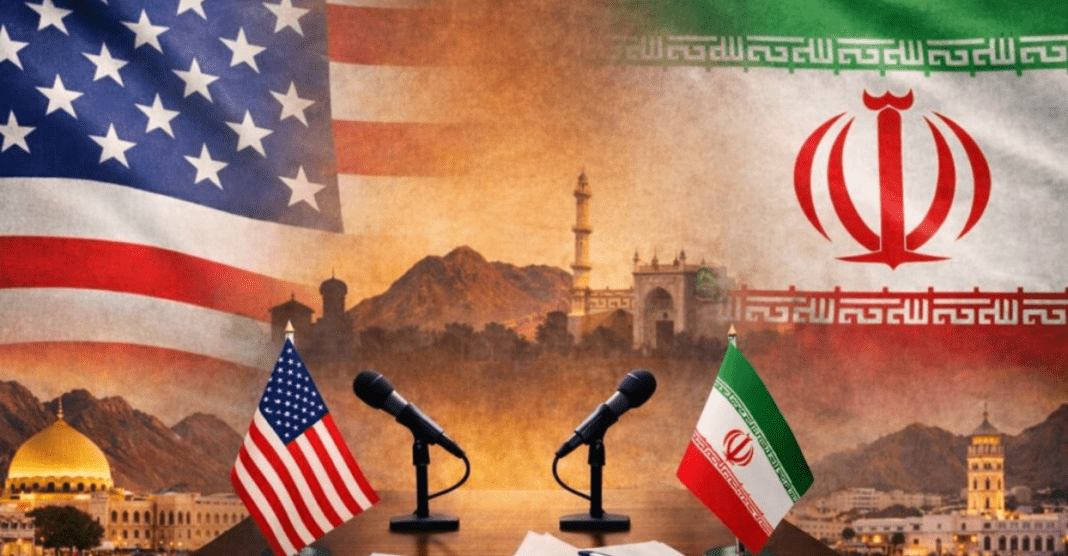

Islamabad Talks on Edge: As high-stakes diplomatic negotiations are set to begin in Islamabad on April 11, tensions between the United States and Iran remain far from resolved.
Despite a fragile ceasefire brokered by Pakistan, both nations are entering the talks with sharply contrasting expectations.
With global stability, oil routes, and nuclear concerns hanging in the balance, these discussions could shape the future of West Asian geopolitics.
A Ceasefire That Barely Holds
Islamabad Talks on Edge: The upcoming dialogue follows a last-minute ceasefire agreement announced by Pakistani Prime Minister Shehbaz Sharif.
This truce came just hours before U.S. President Donald Trump’s dramatic deadline regarding the reopening of the Strait of Hormuz.
While the ceasefire has paused direct escalation, it remains highly unstable.
Continued military activity, especially in Lebanon, and conflicting narratives from both sides have cast serious doubts over the longevity of peace efforts.
Who’s Leading the Negotiations?
Islamabad Talks on Edge: The U.S. delegation is being spearheaded by Vice President JD Vance, accompanied by key figures such as Steve Witkoff and Jared Kushner.
On the Iranian side, a high-level team is expected, potentially including Foreign Minister Abbas Araghchi and Parliament Speaker Mohammad Bagher Ghalibaf.
Their presence signals how crucial these talks are for Tehran.
Iran’s Position: Sovereignty and Strategic Control
Iran is entering the negotiations with a firm stance centered on sovereignty and regional influence.
One of its primary demands is the complete withdrawal of U.S. troops from military bases across the region.
Tehran also insists on maintaining its ballistic missile programme, which it considers vital for national defense.
Another critical demand is retaining control over the Strait of Hormuz, a globally significant oil transit route.
Iran has even proposed imposing a fee on ships passing through the strait, an idea widely opposed by the international community.
Islamabad Talks on Edge: Beyond military concerns, Iran seeks a comprehensive non-aggression pact with the U.S., along with an end to conflicts in all regional theatres, including Lebanon.
It is also demanding the removal of all international sanctions and wants to continue its nuclear programme, particularly uranium enrichment, which it describes as non-negotiable.
Additionally, Iran is pushing for financial compensation and reconstruction support following recent attacks, further complicating the negotiation framework.
Washington’s Agenda: Containment and Control
Islamabad Talks on Edge: The United States, on the other hand, is focused on limiting Iran’s military and nuclear capabilities.
A central demand from Washington is that Iran must completely halt uranium enrichment and surrender its stockpile of enriched uranium.
The U.S. is also pressuring Tehran to scale down its ballistic missile programme and cut ties with allied militant groups operating across the region.
Ensuring free and unrestricted access through the Strait of Hormuz remains another top priority for Washington, which opposes any form of toll or restriction.
Importantly, the U.S. wants to maintain its military presence in the region—at least until a long-term, stable agreement is secured.
Contradictions That Threaten Peace
The biggest challenge lies in the fact that both sides are essentially demanding opposite outcomes.
While Iran seeks strategic independence and control, the U.S. aims to impose restrictions and oversight.
Statements from both sides after the ceasefire further highlight the mistrust. President Trump has claimed that Iran’s publicly stated negotiation points differ from what was privately communicated.
Meanwhile, Iranian officials, including Ghalibaf, have accused the U.S. of violating agreed ceasefire conditions, particularly regarding Lebanon and continued aerial incursions.
This deep mistrust has made the situation even more volatile.
The Nuclear Question: The Core Dispute
Experts believe that the issue of uranium enrichment will be the ultimate deciding factor.
Analysts suggest that for any meaningful resolution, Iran may be required to reduce its enriched uranium levels and suspend enrichment activities for a prolonged period.
However, given Tehran’s firm stance on its nuclear rights, this remains the most difficult hurdle in the negotiations.
Lebanon: The Unexpected Flashpoint
Another major complication is Lebanon. Iran insists that any ceasefire must include an end to hostilities in Lebanon, where Israeli military actions continue.
However, both the U.S. and Israel have shown reluctance to include Lebanon within the framework of these talks.
This disagreement risks derailing the entire process, as regional dynamics continue to influence bilateral negotiations.
Experts Warn of a Fragile Future
Many analysts remain cautiously optimistic but acknowledge the complexity of the situation.
The lack of trust, combined with maximalist demands from both sides, makes a quick resolution unlikely.
Some experts even warn that ongoing military actions, particularly by Israel, could act as spoilers, hardening positions and prolonging the conflict.
A Moment for Global Stability
The Islamabad talks represent more than just another diplomatic meeting, they are a critical test of whether two long-time adversaries can find common ground.
While the ceasefire has opened the door for dialogue, the path ahead is filled with obstacles.
Whether these negotiations lead to lasting peace or further confrontation will depend on how much each side is willing to compromise on its core demands.
Also Read: Diplomacy Amid Bombardment: Can Nawaf Salam’s US Visit Deliver Peace in Lebanon?