
Jaishankar’s ‘SHANTI’ Formula: India has officially started its campaign to win a non-permanent seat on the United Nations Security Council (UNSC) for the 2028–29 term.
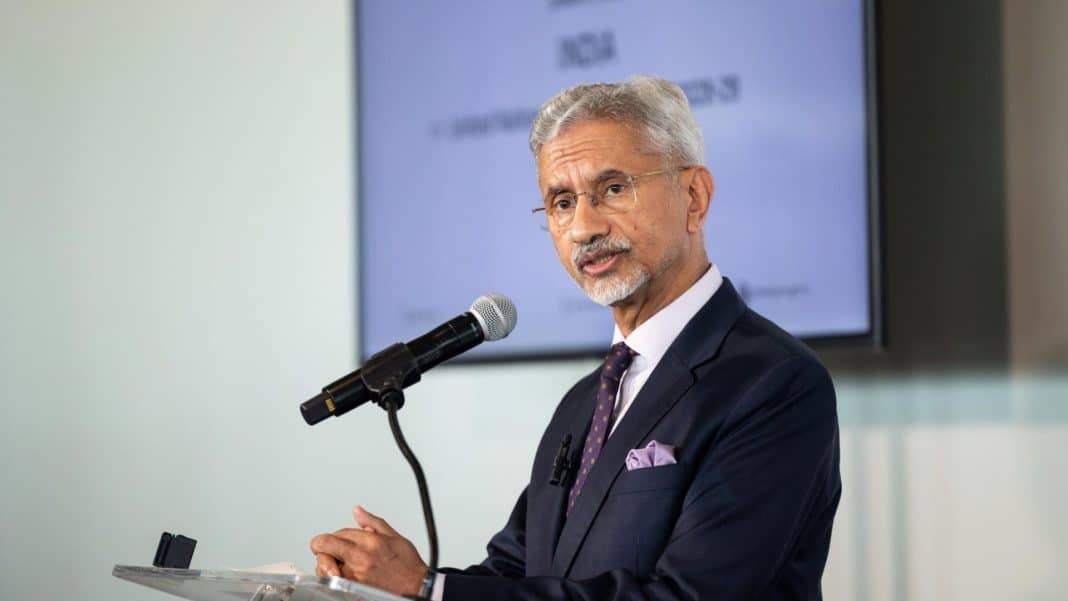
At a major meeting with world diplomats at the UN headquarters in New York, India’s External Affairs Minister S. Jaishankar launched the official campaign. He introduced India’s new global plan called the “SHANTI” vision.
With major wars and conflicts going on around the world, Minister Jaishankar explained that India wants to act as a bridge to bring countries together.
What is S. Jaishankar’s ‘SHANTI’ Formula?
Minister Jaishankar explained that “SHANTI” (which means peace in Hindi) is not just a word. It is a 5-point action plan for the world:
S – Securing Holistic Advancement (Making sure everyone grows together)
H – Holistic approach (Including all nations in big decisions)
A – Advancement through global cooperation
N – Norms (Following international law strictly)
T – Trust (Rebuilding faith between countries)
I – Integrity (Honesty in global politics)
“We want a fair world where the voice of the Global South (developing nations) is actually heard and respected, not ignored.”
— S. Jaishankar, External Affairs Minister
Under this plan, India wants to focus on stopping terror funding, protecting ocean trade routes, helping poor nations with climate change, and setting safe rules for Artificial Intelligence (AI).
The Latest Update: India vs. Tajikistan
Jaishankar’s ‘SHANTI’ Formula: India has already served as a non-permanent member of the UNSC eight times (most recently in 2021–22). However, the upcoming election will be a direct diplomatic battle.
[ INDIA ] ◄─── The June 2027 Election ───► [ TAJIKISTAN ](Backed by: USA, (Backed by: 57-member
Austria, Fiji, Sri Lanka) OIC Islamic Bloc)
The Voting Date: The election for this single Asia-Pacific seat will take place in June 2027.
The Rival: India is competing directly against Tajikistan for this seat.
Jaishankar’s ‘SHANTI’ Formula: The Voting Math: India has strong structural support from powerful allies like the United States, Austria, Fiji, and Sri Lanka. On the other side, Tajikistan has the backing of the 57-member Organisation of Islamic Cooperation (OIC).
Because of this, Minister Jaishankar and Indian diplomats are working hard to win votes from African and Latin American countries.
Why India Demands Changes at the UN
During the launch, Minister Jaishankar strongly criticized the current UN system. Prime Minister Narendra Modi has also stated that the UN cannot run on rules made in 1945.
India is demanding three main changes:
Real Power, Not Just Temporary Seats: India argues that just adding more temporary seats is a fake fix. The real issue is expanding the permanent category and fixing the unfair “Veto power” system.
Stop Delaying Tactics: India’s UN Ambassador, Harish Parvathaneni, openly criticized countries that are blocking UN reforms by making excuses. He warned that keeping things exactly as they are hurts the entire developing world.
Modern Solutions for Modern Problems: India wants the UN to handle modern threats, such as cyber warfare, sea safety, and the uncontrolled rise of AI.
Why India Has a Strong Case
India’s campaign rests on actual work done over decades:
UN Peacekeeping: India is one of the top historic defenders of UN peace missions. India has sent around 300,000 soldiers over the years, and over 4,300 Indian troops are currently deployed in danger zones worldwide.
Global Helper: India has funded development projects in 79 different countries, making it a trusted partner for smaller, developing nations.
Minister S. Jaishankar’s “SHANTI” launch shows that India no longer wants to just follow global rules made by Western powers, India wants to be one of the key nations writing the new rules for global peace.